My appreciation for the culinary arts has been deepened in the most unexpected ways through my work as an educator. I have had the privilege of being introduced to the rich, aromatic world of Syrian desserts by some of my own students—talented individuals who, before joining my classroom, worked as professional chefs in Syria. Through their stories and the flavors they have shared with me, I have come to realize that sweets in Syrian culture are far more than just a culinary afterthought; they are a profound symbol of hospitality, conviviality, and community spirit.
From bustling Damascene street markets to grand weddings and religious festivals, these treats are woven into the very fabric of Syrian life. The distinct, authentic taste of Syrian confectionery is largely defined by the masterful use of high-quality, local ingredients: homemade ghee (samneh), natural cream (qishta), an abundance of pistachios and walnuts, and aromatic floral waters like mazaher. Mazaher, or orange blossom water, has historical roots dating back to the Umayyad caliphate (AD 661-750) and is a quintessential flavoring for many Middle Eastern syrups and pastries, while also holding a place in local folk medicine.
The Luxurious Legacy of Baklava
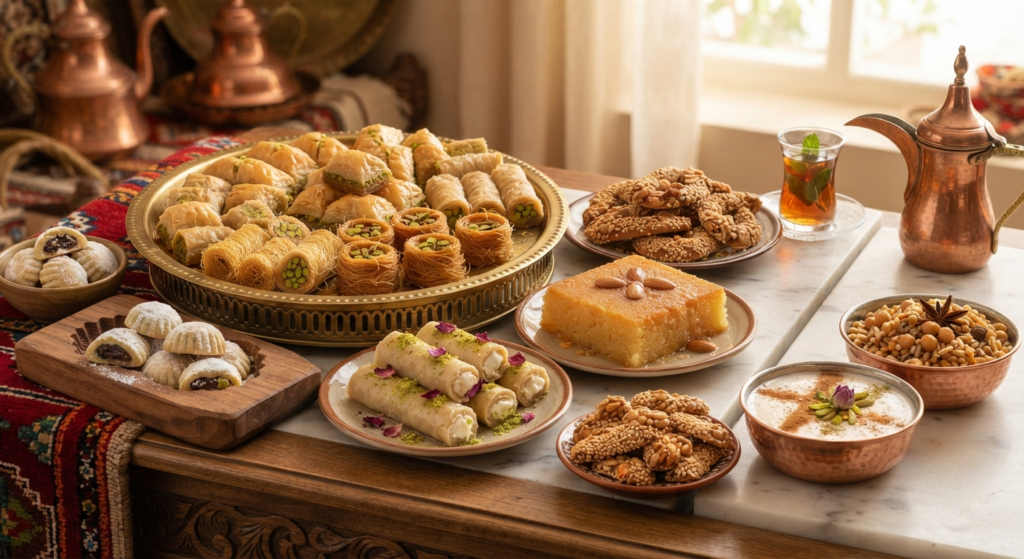
Perhaps the most internationally recognized category of Syrian sweets is the Baklava family. Rooted deeply in the history of the Ottoman Empire, baklava is considered a luxurious dessert reserved for special occasions, holidays, and celebrations. My students have often described the painstaking process of creating the delicate, paper-thin dough that Syrian craftsmen are renowned for, which is layered with caramelized pistachios and drizzled with a fragrant sugar syrup.
Beyond the classic diamond-shaped cuts, the baklava family includes several intricate variations:
- Ballourieh: Translating to “white and clear,” this treat originated in the city of Aleppo. It is made with soft kunafa dough generously stuffed with pistachios and is baked only briefly to maintain its distinct, glowing white color.
- Osh Al-Bulbul: Meaning “bird’s nest,” this high-end delicacy shapes rough kunafa dough into small nests, which are filled with pistachios and baked until perfectly golden and crispy.
- Mabroumeh: A beloved variant featuring sweet vermicelli pastry tightly wrapped around pistachios, traditionally sliced into bite-sized pieces and offered to guests.
Ramadan and Festive Traditions
Religious holidays and fasting months dictate the rhythm of Syrian dessert consumption. During the holy month of Ramadan, Qatayef reigns supreme. This folded, pancake-like dessert has an illustrious history tracing back to the Abbasid Caliphate, with tenth-century Arabic cookbooks specifically mentioning recipes created for the Caliph Harun al-Rashid. Throughout Ramadan, street vendors and bakeries churn out these treats daily, making them one of the most anticipated parts of the evening iftar meal. Qatayef can be stuffed with nuts or sweet cheese and fried, or served as Assafiri qatayef—which is unbaked, folded halfway around a rich cream filling, and drizzled with scented syrup.
Other Ramadan street food staples include Mshabak and Awama. Mshabak is affectionately known as the “dessert for the poor” due to its affordability, and features a semolina dough piped into hot oil in a circular, spiral shape. Awama, or “fried apricots,” are made from white wheat flour and rapidly fried on the spot by highly skilled chefs to ensure maximum crispness before being soaked in syrup.
When Ramadan concludes, Eid Al-Fitr brings the tradition of Maamoul. These intricate, melt-in-your-mouth shortbread cookies are stuffed with dates, walnuts, or pistachios. Making Maamoul is a communal activity in the final days of Ramadan, signifying the joy and celebration of the Eid holiday.
Semolina Classics: Hareesa and Halawat Al-Jeben
Semolina is a foundational ingredient in Syrian sweets, historically revered as the finest, most precious part of the wheat harvest. This reverence is evident in Hareesa (also known regionally as Basbousa or Namura), a crumbly, moist semolina cake soaked in sugar syrup. Historically, semolina cakes have been a symbol of generosity, traditionally offered to guests on large trays at engagement parties, post-fasting meals, and weddings. The city of Al-Nabk, located near the Syrian-Lebanese border, is especially famous for its Hareesa Nabqia, making the city a popular culinary pit-stop for travelers journeying to and from Damascus.
Another iconic semolina-based treat is Halawat Al-Jeben, a dessert that has sparked a fierce, long-standing culinary rivalry between the cities of Homs and Hama over its true origin. First appearing in the 19th or 20th centuries, this dessert features a smooth, sweet dough made from semolina and cheese (such as Akkawi), rolled and stuffed with rich clotted cream. Historically popularized during the spring when fresh cheese was abundant, it is now beloved year-round. In the sweltering summer months, it forms a perfect pairing when served alongside booza, the traditional, stretchy Arabic ice cream.
Everyday Delights and Street Foods
Syrians also cherish a variety of everyday treats. Barazek, originating in Damascus, are light, crispy biscuits generously coated in sesame seeds and pistachios. They are typically served alongside a warm cup of Arabic coffee or tea and are renowned for representing Syrian conviviality and community exchange.
In the old neighborhoods and markets of Damascus, vendors sell Tamari Kaak, a unique, sweet street food. It consists of a thin, circular bread slathered with grape molasses, sesame sauce (tahini), and banana slices, sometimes updated by modern vendors with chocolate and condensed milk.
Breakfasts, too, have a sweet side. Tahini Halawa, prepared with sesame flour, milk, and nuts, is a nutrient-dense breakfast staple enjoyed weekly by many families. Conversely, during the bitter cold of winter, Syrians warm up with Granis (or Hobob), a hearty, sweet mixture of boiled legumes, chickpeas, and hulled wheat flavored with anise and fennel. Sahlab, a hot, sweet drink thickened with orchid powder and topped with cinnamon and nuts, also provides comforting warmth on chilly mornings—a tradition my students fondly remember from their own childhoods.
Conclusion
The traditional sweets of Syria offer a profound glimpse into the region’s rich history and cultural values. From the lavish, Ottoman-inspired baklavas to the ancient, Abbasid-era Qatayef, every bite is steeped in tradition. These desserts are not merely after-dinner indulgences; they are edible symbols of Syrian generosity, communal joy, and an enduring culinary heritage. Having learned about these traditions firsthand from my students, I have gained a new appreciation for how these recipes continue to connect generations and captivate palates around the world.