Bang, bang, bang! The abrupt, sharp sound reverberated through the thin walls of my Can Tho hotel room at exactly 4:30 AM. It was an urgent and impossibly loud pounding on the door that ripped me instantly from the depths of a heavy, humid sleep. I scrambled out of bed in the dark, my mind still thick with exhaustion, grabbing my camera, a wide-brimmed hat, and a light jacket. Stepping out into the pre-dawn air of the Mekong Delta, the streets were already enveloped in a sticky, breathless heat that seemed to cling instantly to the skin. Making my way down to Ninh Kieu Wharf, I fully expected to find a quiet, sleepy dock bathed in the gentle, solitary glow of a few lonely streetlights.
Instead, I was met with a staggering, chaotic sea of humanity. Thousands of people were already there, forming a massive, shuffling crowd of eager Vietnamese tourists, local families, and animated guides waving small, brightly coloured flags. Everyone was inching their way toward the dark waters where a massive fleet of wooden boats waited in the shadows, their engines idling with a low, rumbling thrum. Standing head and shoulders above the local crowd, I glanced around and quickly realised that I was entirely alone in my demographic—the only Westerner in sight. There was a unique, undeniable thrill to this realisation. It brought a profound sense of being completely immersed in a cultural rhythm far removed from my own, standing at the gateway to the mighty Mekong before the rest of the world had even woken up.
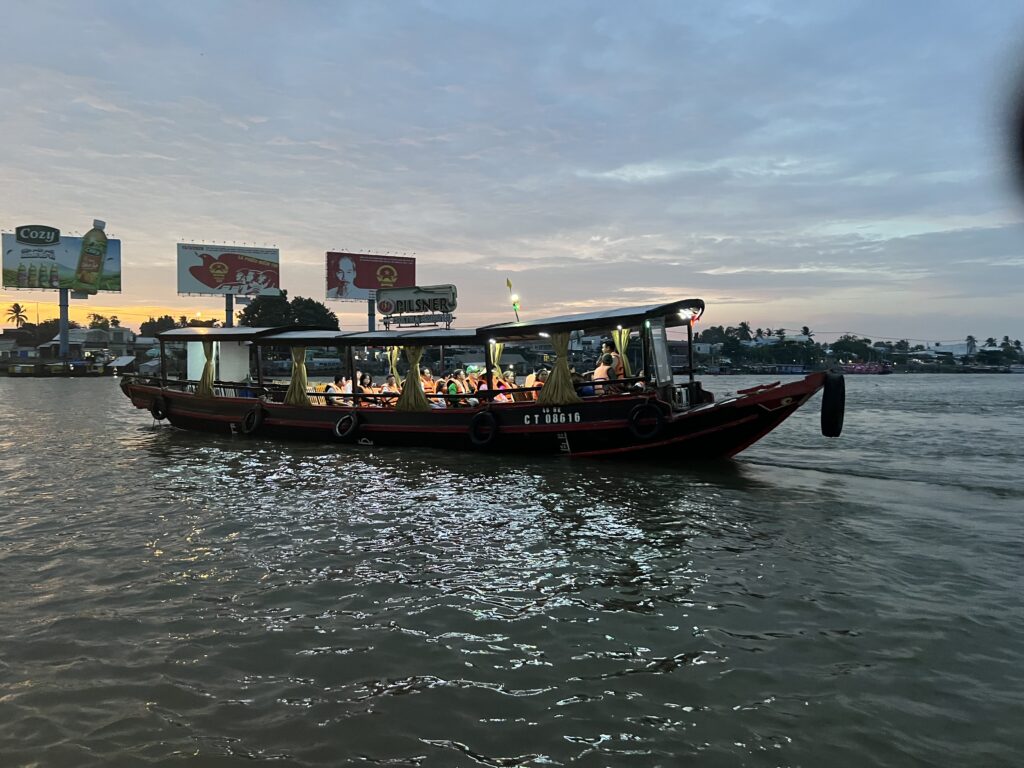
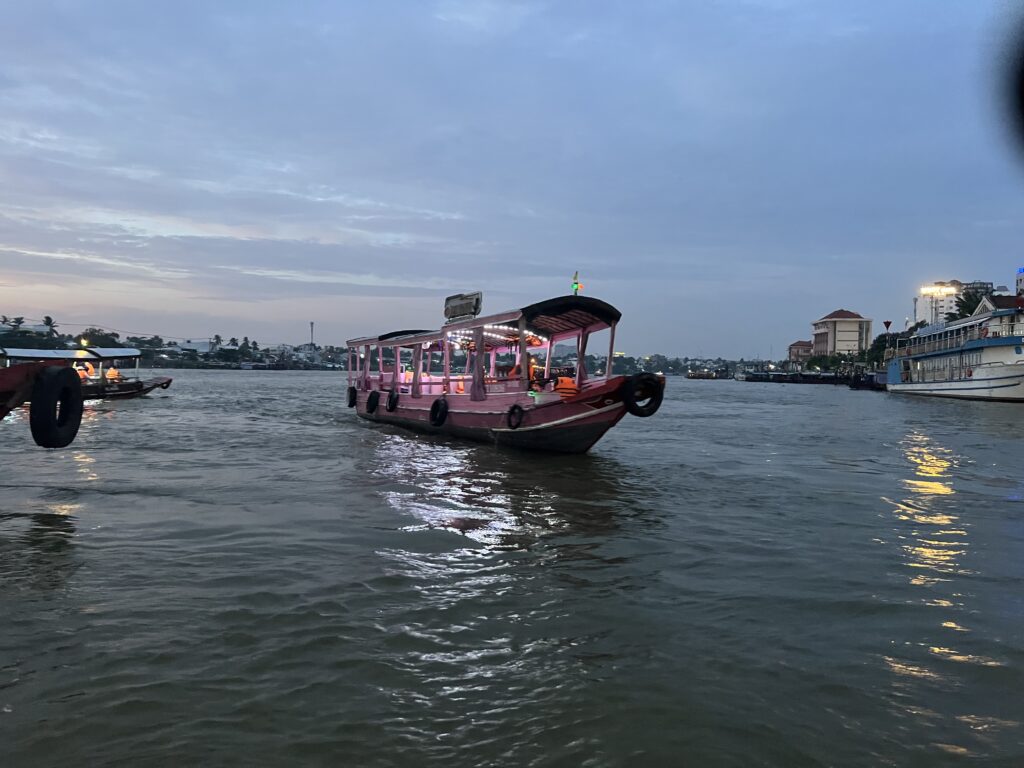
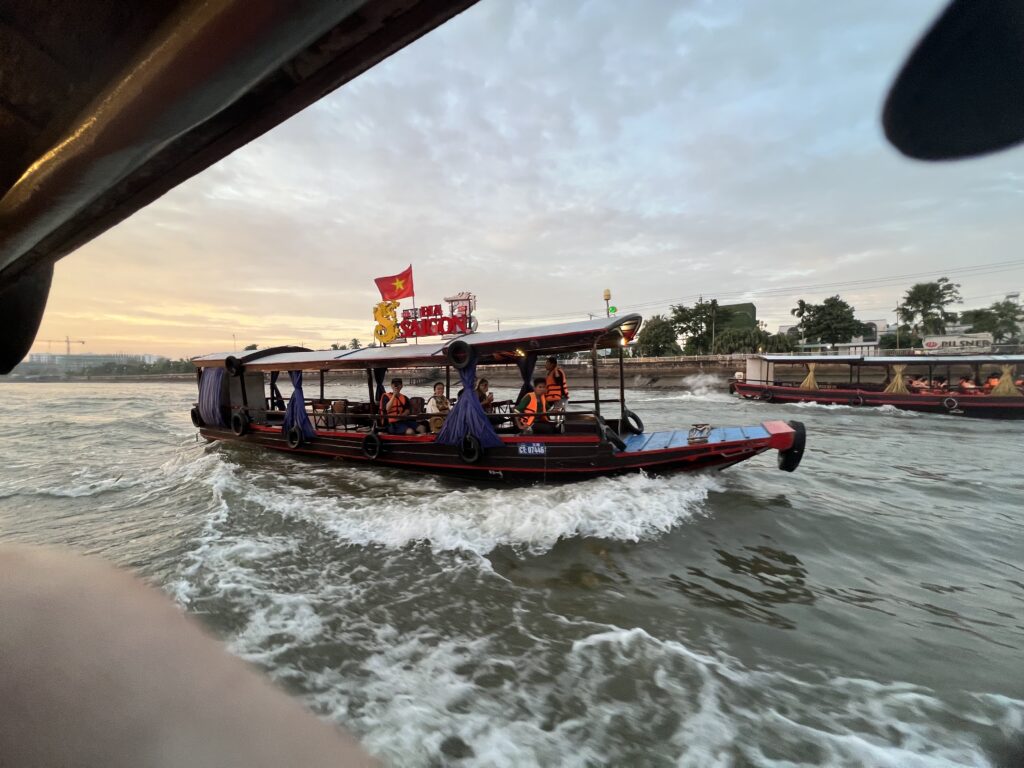
We piled onto our designated tourist boat, the wooden deck gently swaying and groaning under the collective weight of the passengers. With a sputtered, smoky cough, the engine roared to life, and we pushed away from the illuminated pier into the inky blackness of the Hau River. The cruise down the river before dawn was surprisingly peaceful, the cool morning breeze offering a much-needed respite from the oppressive humidity that would surely arrive with the rising sun. The dark water slapped rhythmically against the wooden hull as our captain expertly navigated the labyrinthine channels, guided only by the dim silhouettes of the riverbanks and the occasional passing light of another early-riser.
Soon, the shadowy silhouette of a smaller vessel emerged from the lingering river mist. It was a floating cafe boat, perfectly positioned to intercept hungry travelers before the main market rush. We idled alongside it, and the rich, complex aroma of simmering pork bone broth, dried shrimp, toasted garlic, and fresh coriander instantly filled the air. For just a few thousand Vietnamese Dong—barely pennies in Australian currency—I was handed a steaming, fragrant bowl of hu tieu, the region’s famous noodle soup. The vendor, an older woman with a weathered but deeply kind face, balanced precariously on the edge of her small sampan, ladling boiling broth with practiced precision despite the gentle rocking of the water. Sitting on a hard wooden bench, I slurped the incredibly cheap and wildly flavourful noodles. I paired it with an iced kho coffee—a powerfully strong, bitter, dark roast brew perfectly balanced with a generous pour of thick, sweet condensed milk. Watching the eastern horizon slowly turn from a bruised purple to a soft, hazy pink, I felt a deep appreciation for the perfection of this floating breakfast.
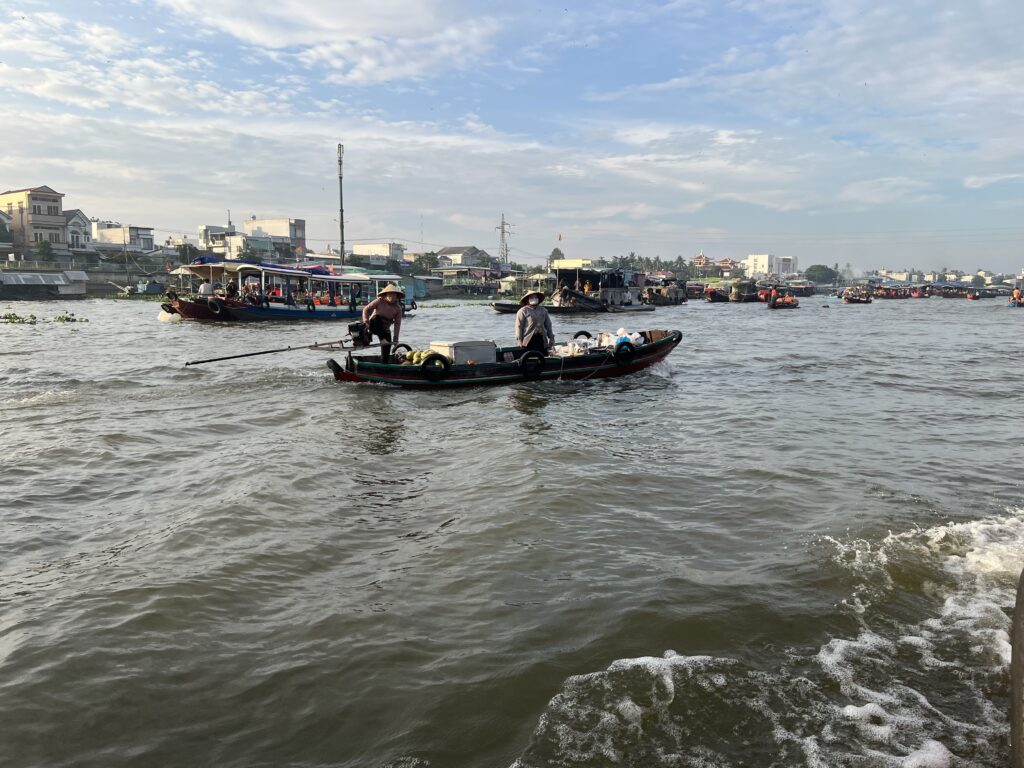
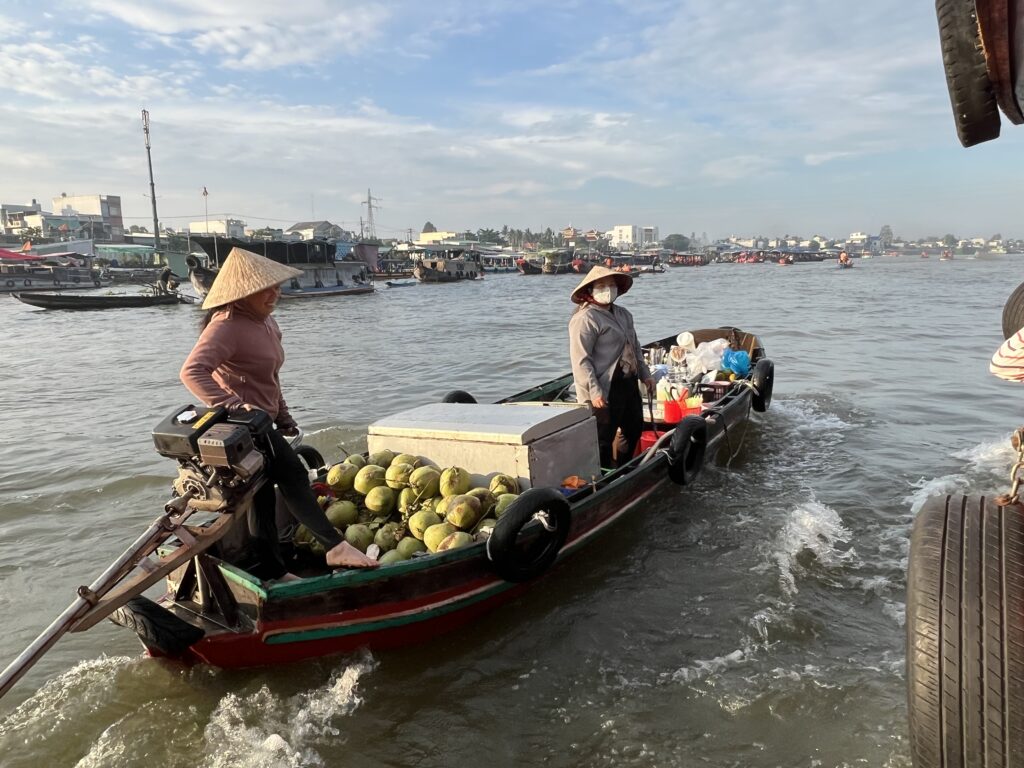
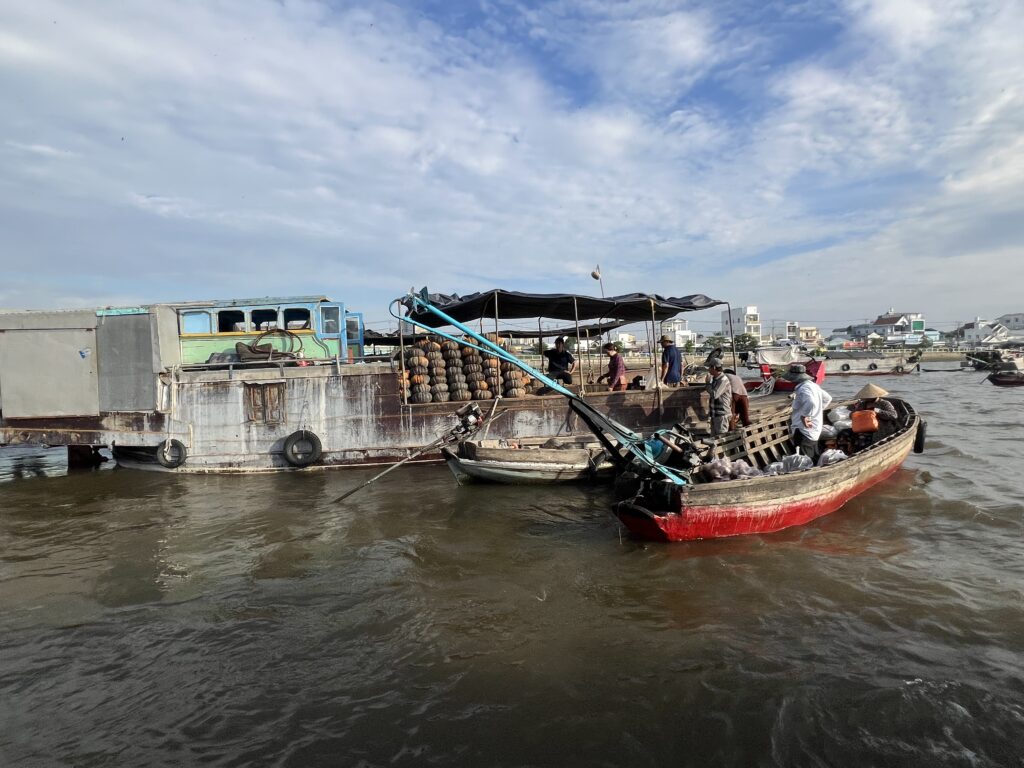
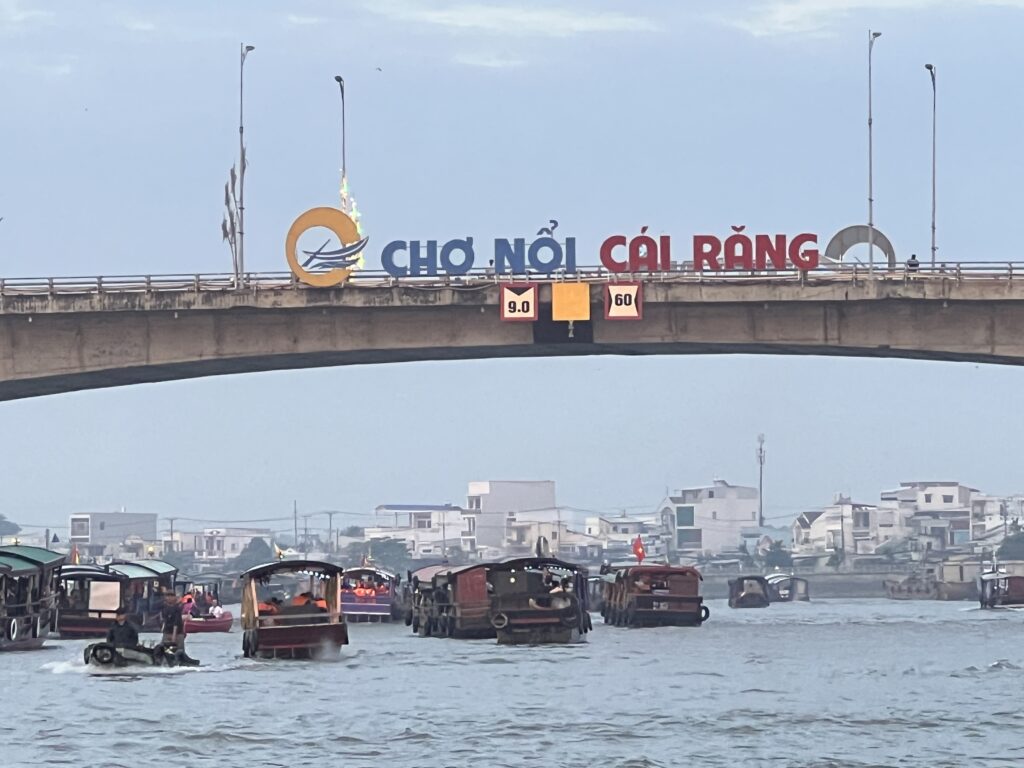
By the time the last drops of broth were finished, the sun was beginning to properly peek over the horizon, casting a brilliant golden glow across the rippling water. We had arrived at the Cai Rang Floating Market, and the sheer scale of the spectacle was breathtaking. Hundreds of little wooden boats were lined up, forming a chaotic but strangely harmonious congregation of floating commerce. The market was a symphony of revving outboard motors, the splashing of oars, and vendors calling out their prices across the water.
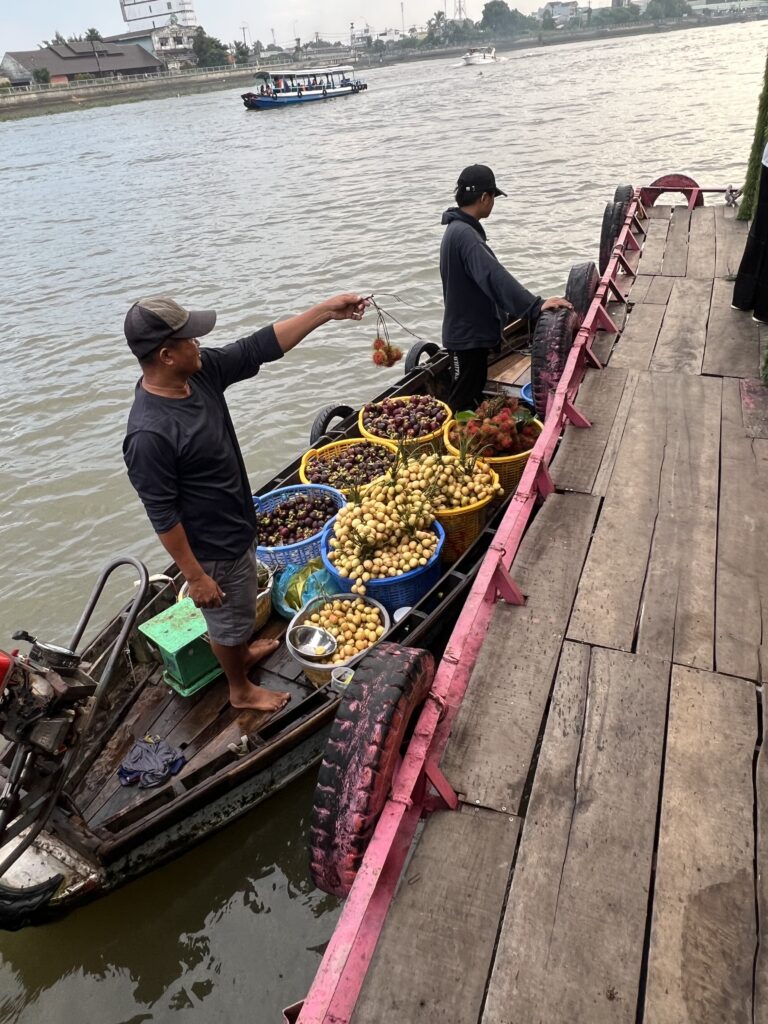
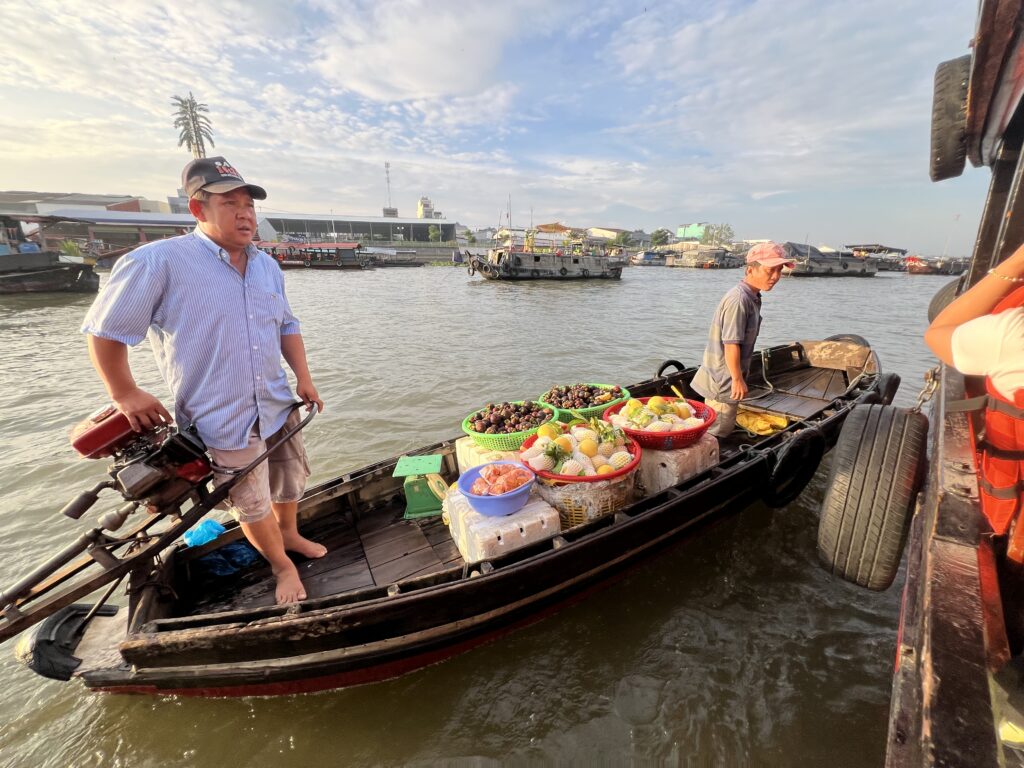
Suddenly, our large tourist boat became a primary target. Small wooden sampans darted toward us from every direction, expertly navigated by women balancing at the stern. They sidled right up to our hull, their small boats overflowing with a vibrant, dizzying spectrum of tropical produce. There were mountains of prickly red rambutans, spiky pungent durians, smooth yellow mangoes, and perfectly stacked pyramids of pineapples. I quickly learned to decipher the market’s ingenious visual advertising system: the beo pole. Each vendor had a tall bamboo pole erected at the bow of their boat, with a physical sample of their wares dangling high in the air. If you wanted a pineapple, you simply scanned the horizon for a boat with a pineapple swaying against the morning sky. It was a brilliant, practical solution to the overwhelming noise of the river.
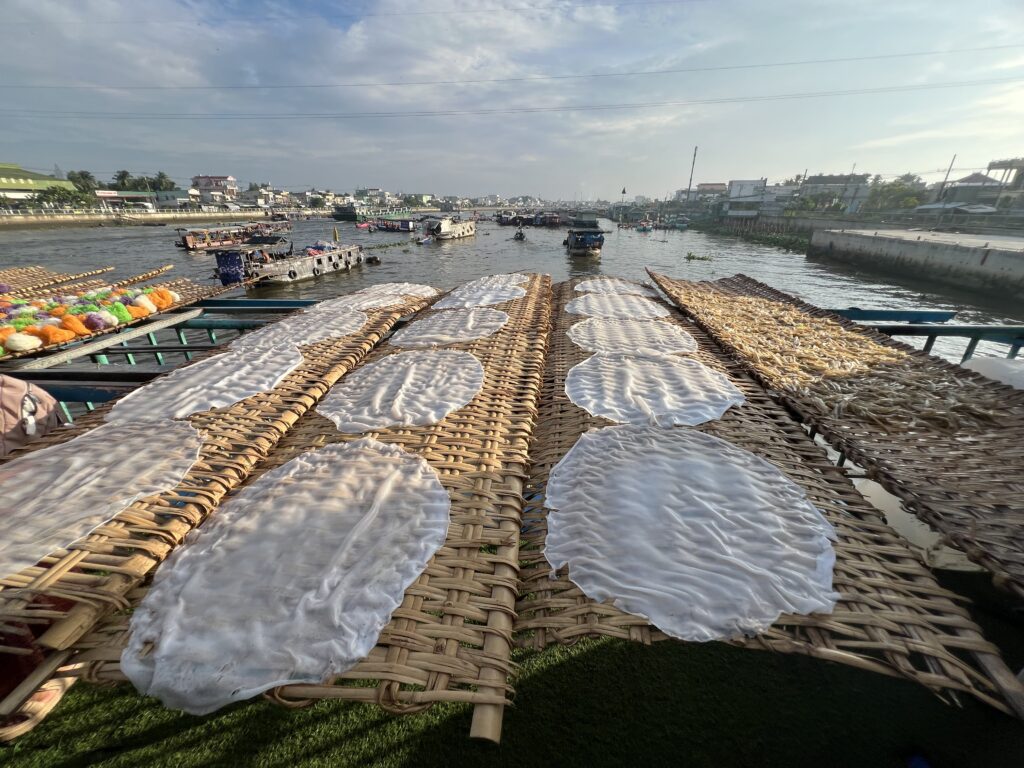
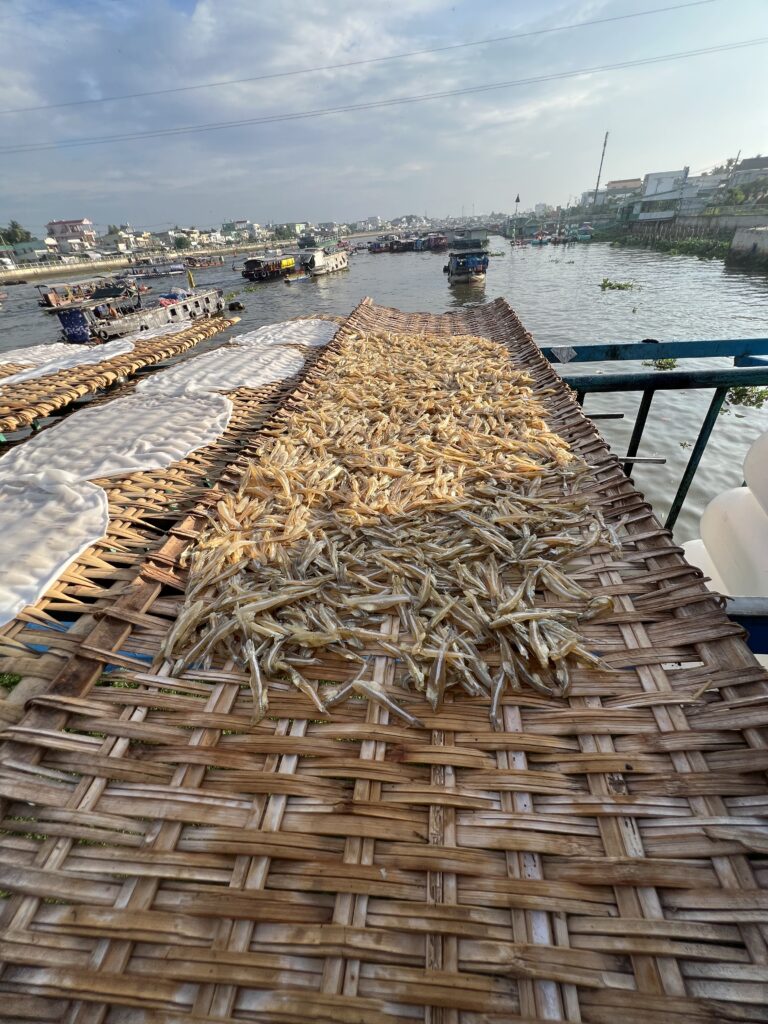
Our captain eventually steered us away from the thickest, loudest part of the traffic jam, pulling us alongside a larger, stationary traditional noodle boat. This was a mesmerizing stop. Here, a group of Vietnamese girls, dressed elegantly in traditional ao ba ba garb—the classic, silky, button-down shirts and loose trousers of the southern countryside—were hard at work making rice noodles in a beautifully traditional sense. The process was rhythmic and incredibly labor-intensive. Working over open fires that radiated intense heat, they poured ladles of milky white rice batter onto steaming hot surfaces. Within seconds, the batter cooked into thin, delicate, translucent crepes, which were then skillfully lifted with bamboo sticks and laid out on large, woven bamboo mats to dry under the rising sun. Later, these sun-dried sheets would be fed through a mechanical shredder to create the very noodles I had just eaten for breakfast. They even showcased a local culinary invention—the “rice noodle pizza”—where the noodles were deep-fried into a crispy, golden disk and topped with savory meats, crushed peanuts, and fresh herbs. Watching them work with such practiced, effortless grace, preserving a culinary art form right on the water, added a profound layer of cultural appreciation to the morning.
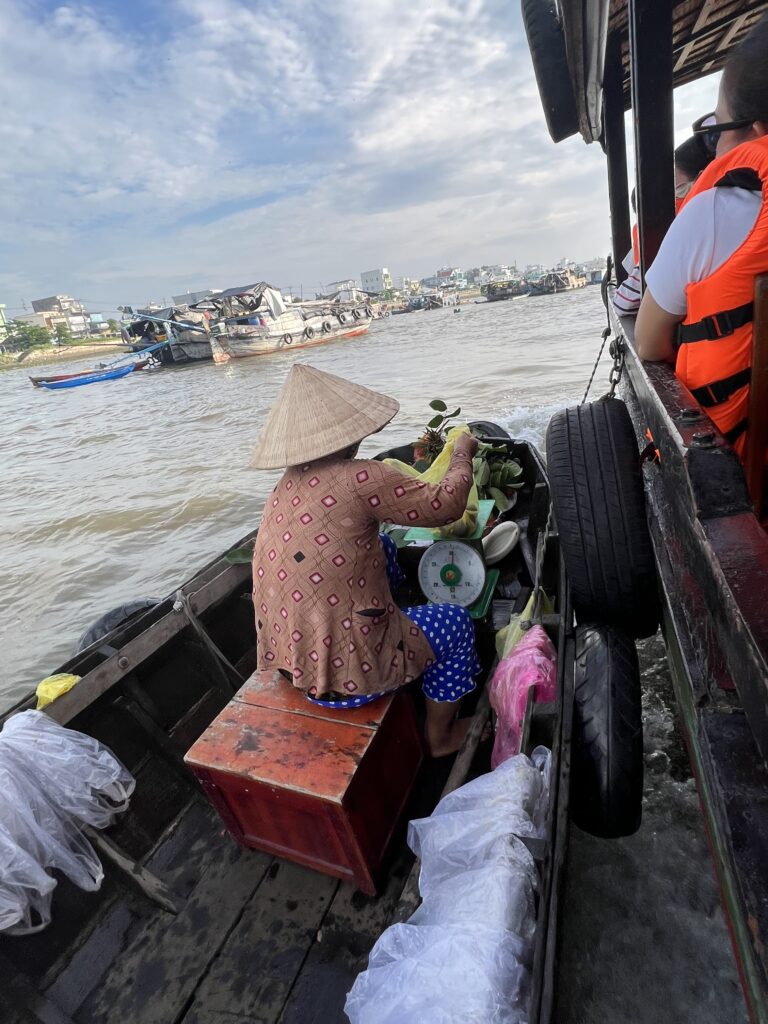
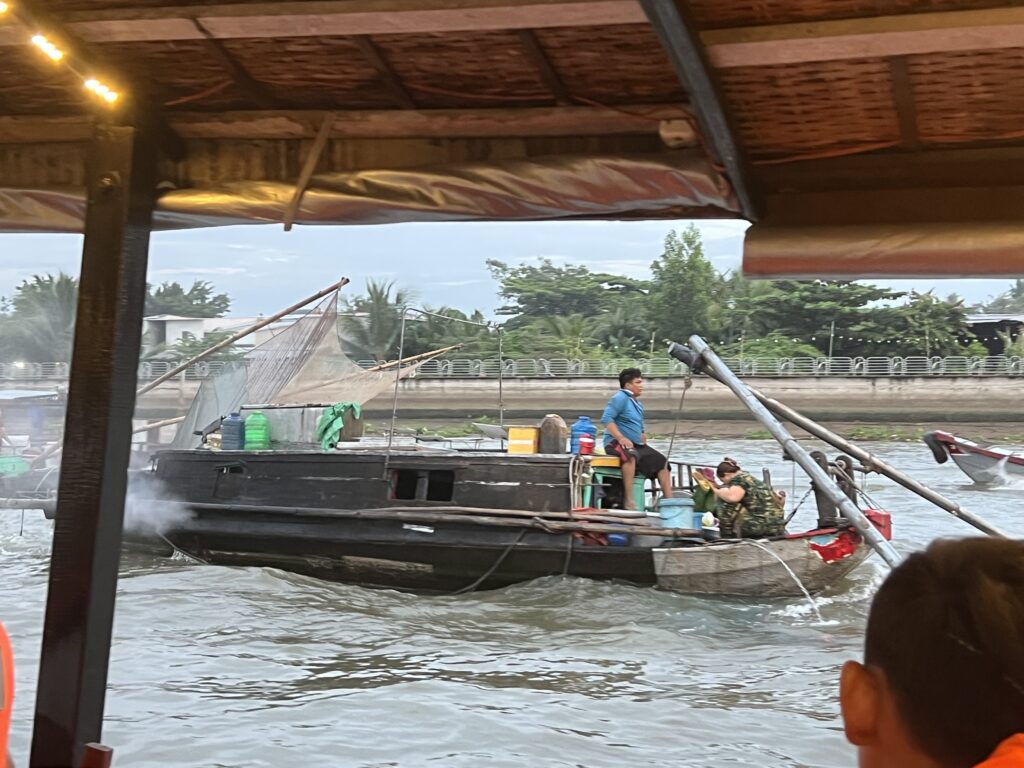
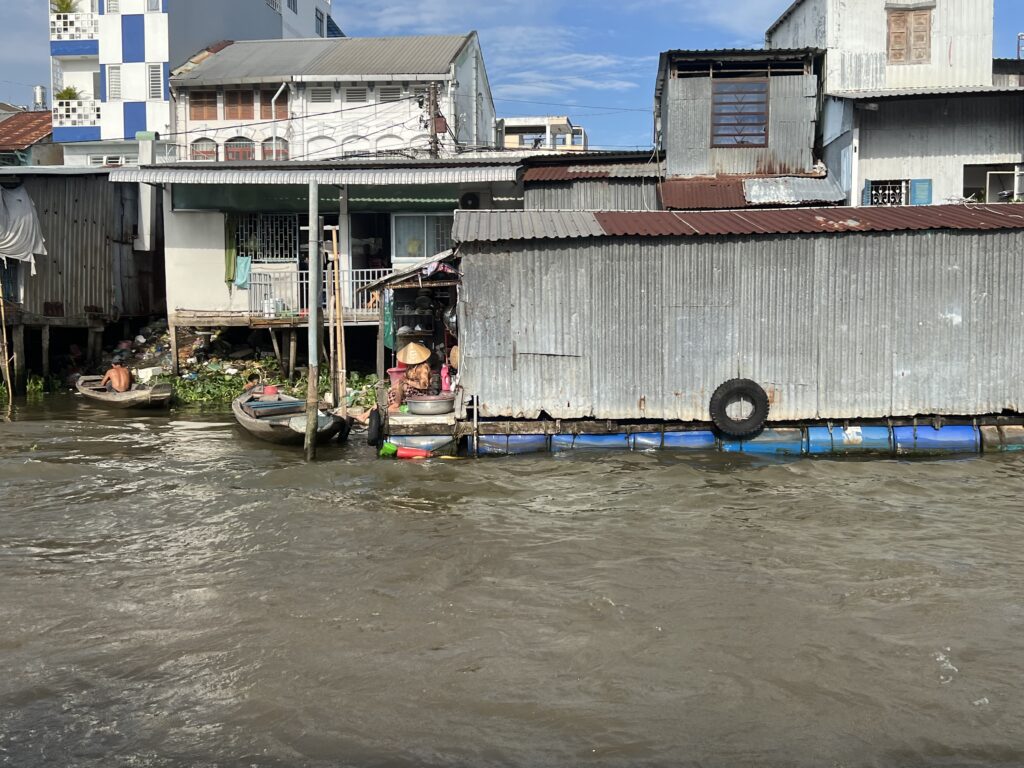
Pushing away from the noodle workshop, our boat was immediately swarmed once again. More market boats, their captains eager to sell off their remaining morning wares, flanked our vessel. They matched our cruising speed perfectly, siding up to the boat to aggressively barter and sell their goods. The transactions were swift, loud, and delightfully acrobatic. Crumpled, brightly coloured Vietnamese bills were exchanged for heavy plastic bags of fruit, tossed lightly across the watery gap between the moving boats. Despite the obvious language barrier, the warm smiles, the expressive hand gestures, and the universal language of trade made it incredibly easy to participate. I bought a heavy cluster of fresh mangosteens, the vendor flashing a brilliant, genuine smile as she handed over the thick-skinned purple fruit. Peering into these smaller vessels as they drifted alongside us, I realized they weren’t just market stalls; they were actual floating homes. I could see tiny makeshift kitchens with small gas stoves, roaming pets curled up on sacks of rice, and hammocks strung casually across the stern for children to sleep in while their parents worked the river.
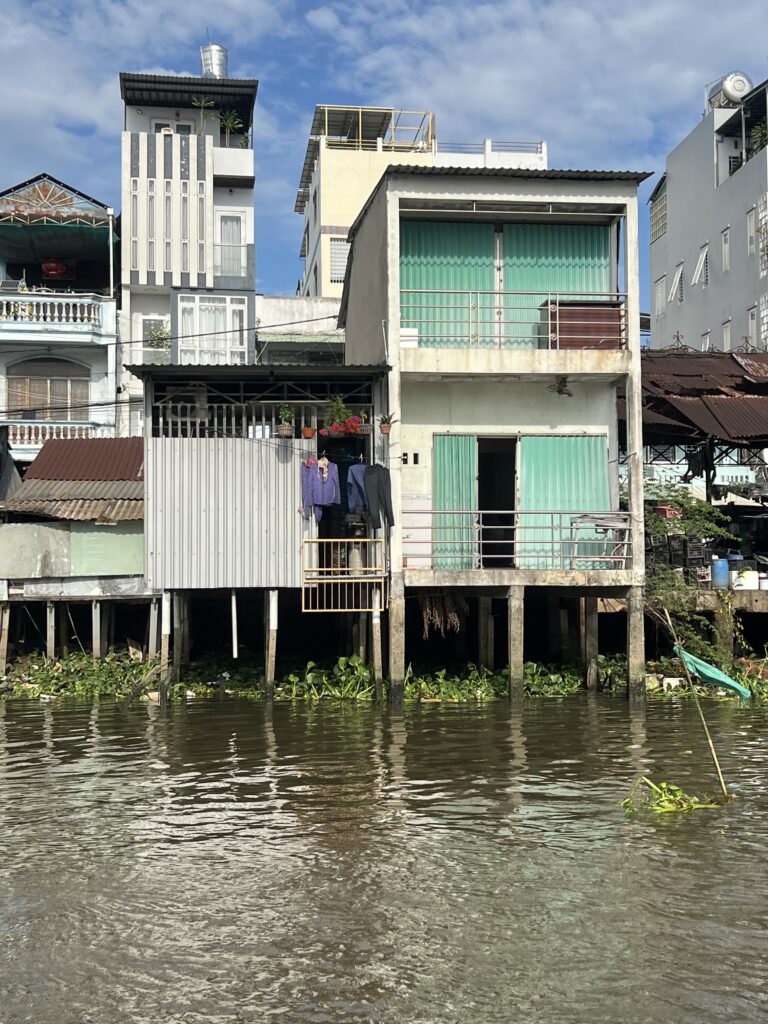
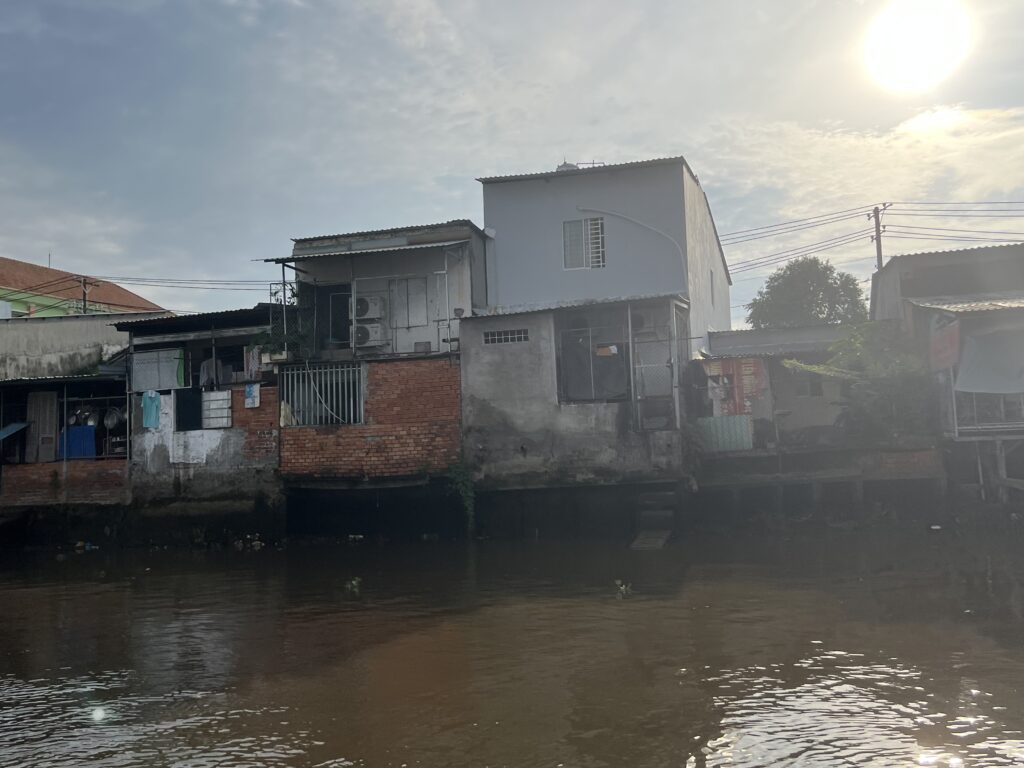
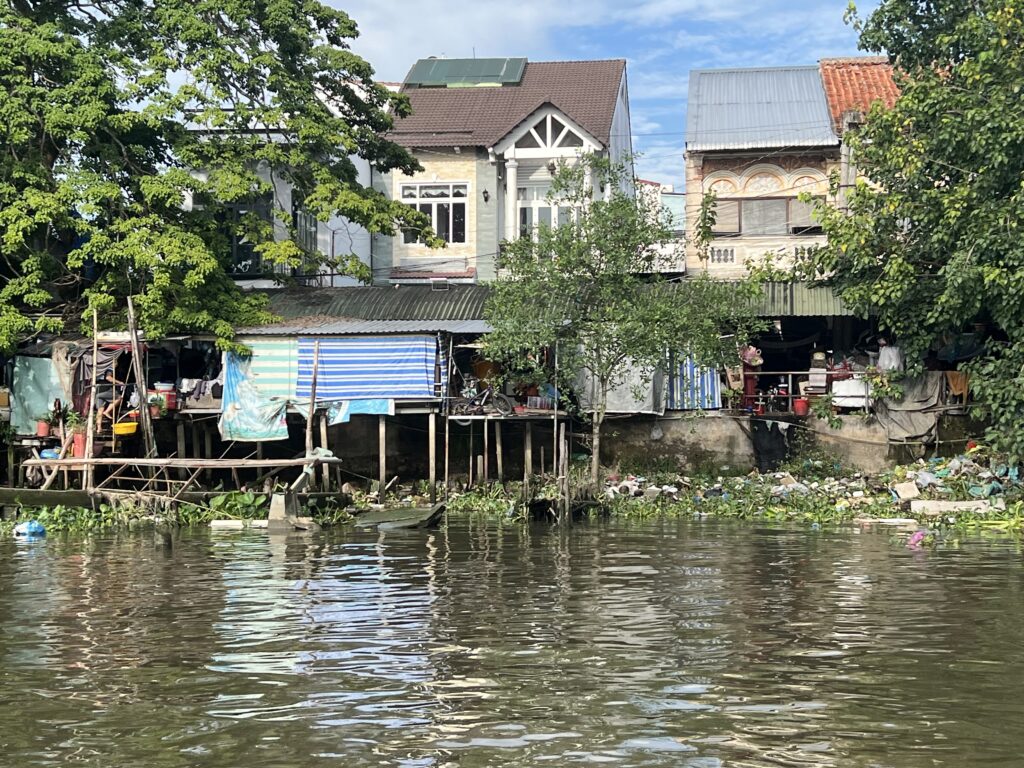
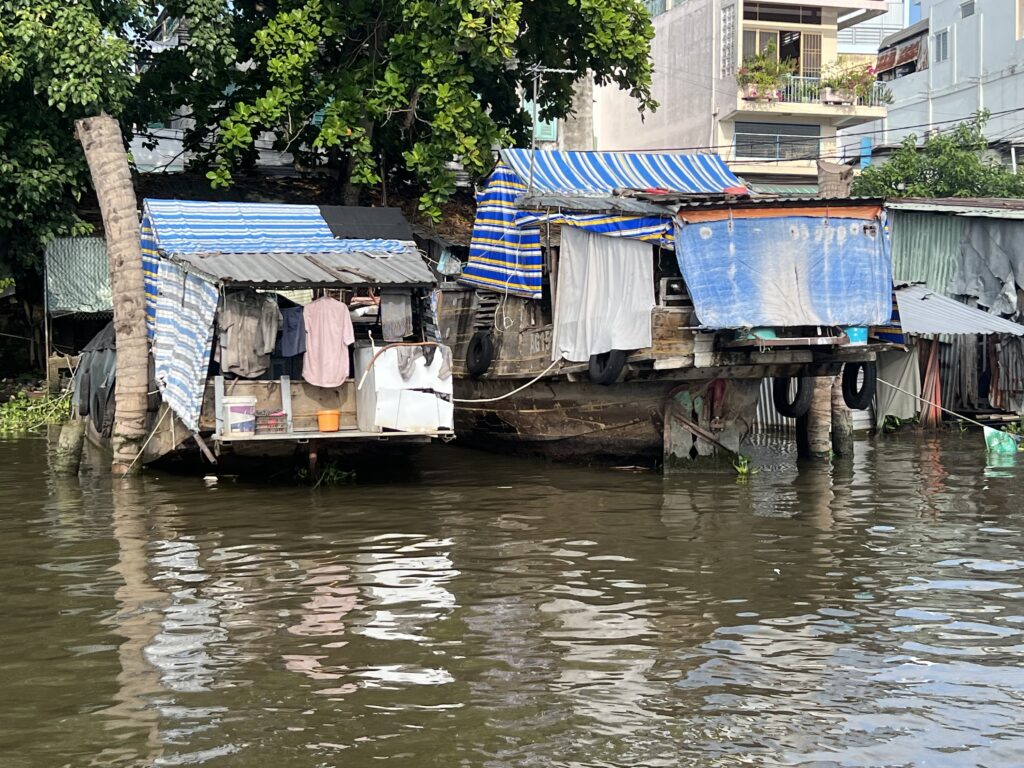
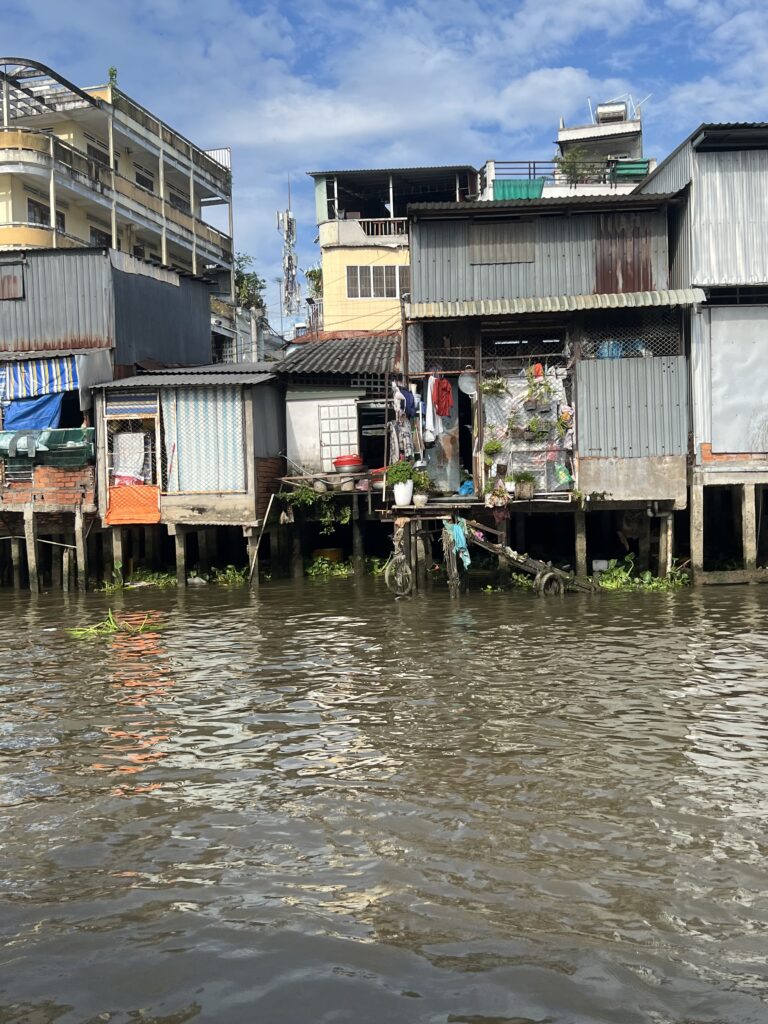
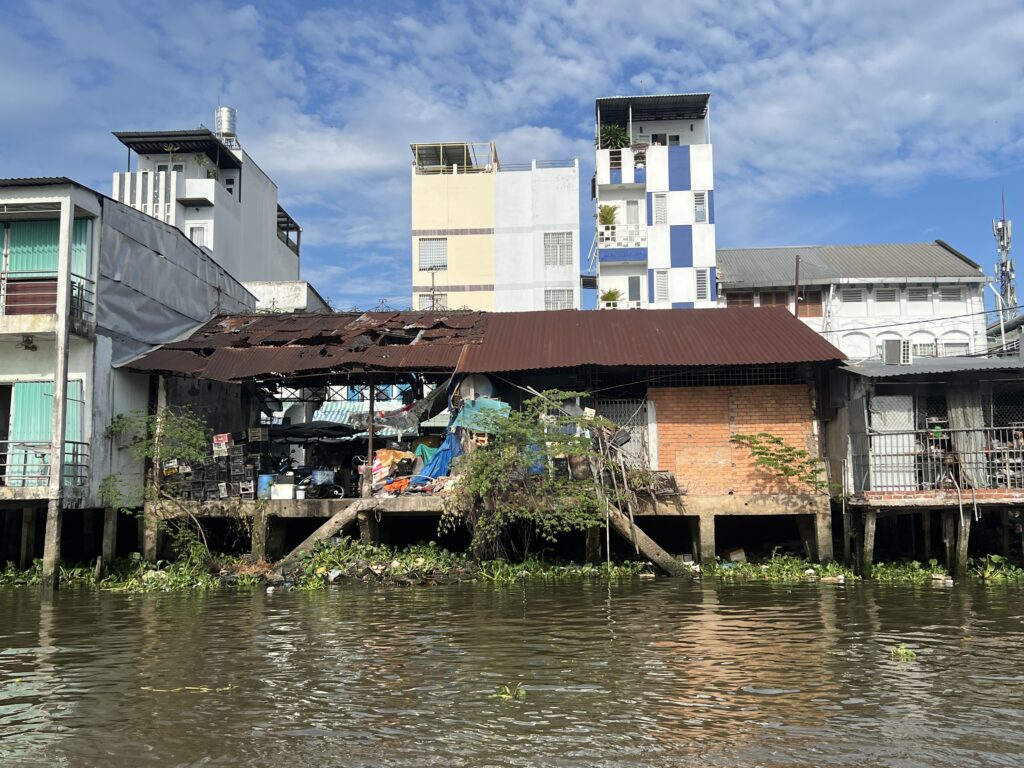
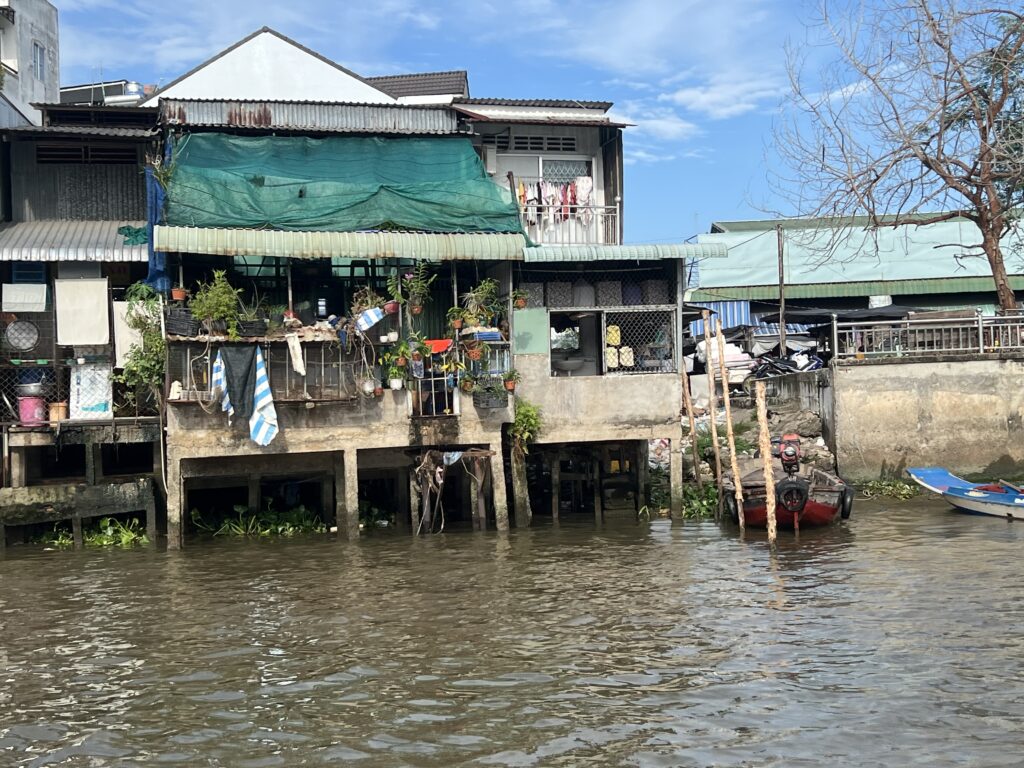
Leaving the bustling, overcrowded main artery of the Cai Rang market behind, our boat veered sharply off the Hau River and slipped into the narrower, much quieter side rivers. The atmosphere shifted instantly from chaotic, loud commerce to a serene, almost secretive world. As we cruised slowly down these winding smaller canals, shaded by dense canopies of drooping water coconut palms, I was utterly captivated by the river stilt houses that lined the muddy banks. They appeared to just hang onto the river bank very precariously, suspended directly over the swirling, murky water on incredibly tall, slender bamboo and wooden poles. These fascinating vernacular structures, specifically built to withstand the dramatic, violent rising waters of the annual monsoon season, looked incredibly fragile to my Western eyes. Yet, they had safely sheltered generations of delta families. We drifted past concrete modernist homes standing shoulder-to-shoulder with simple, rust-streaked corrugated metal shacks, all hovering magically above the water’s surface, defying gravity.
We made a brief stop at a small side market situated firmly on the river bank. This terrestrial market felt entirely different, reminiscent of the quieter, retail-focused village markets of the region. Here, under the shade of massive banyan trees, locals traded everyday household goods, intricate bamboo crafts, fresh river fish flopping in shallow metal basins, and sweet, sticky rice wrapped in banana leaves. It was far away from the tourist gaze. Walking through the narrow, dirt aisles, it felt like peeking behind the heavy curtain of the Mekong Delta, witnessing the quiet, daily survival of the river people away from the grand, orchestrated spectacle of the main channel.
The sun was now beating down with tropical intensity as we boarded our boat once more and began our slow, final cruise back toward the tourist terminal. I settled into my seat, fully looking forward to a quiet, reflective journey back, hoping to be lulled into a state of zen by the gentle rocking of the boat, the warm breeze, and the picturesque, green scenery sliding past. But the Mekong Delta always has a way of surprising you.
Without warning, a sharp crackle of static erupted from the boat’s PA system, vibrating through the wooden floorboards. It was immediately followed by the unmistakable, heavily synthesized, booming beat of upbeat Vietnamese karaoke tracks. Any lingering hopes of a silent, meditative retreat vanished in an instant as the passengers on board—my fellow Vietnamese tourists—eagerly and aggressively grabbed the microphone.
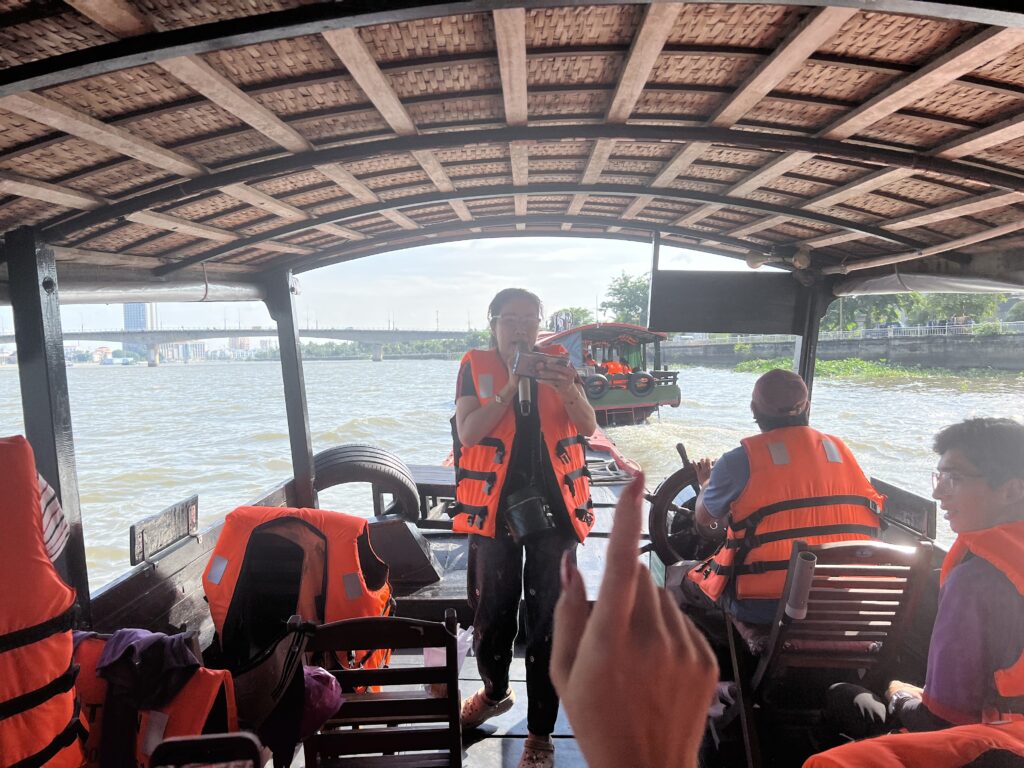
One by one, they began belting out karaoke favorites, their passionate, uninhibited voices echoing loudly across the wide, open expanse of the river. Some were surprisingly talented, hitting emotional high notes with dramatic flair, their eyes closed in deep concentration; others were wonderfully, unapologetically off-key, shouting the lyrics with roaring laughter. But the sheer enthusiasm of the entire group was highly infectious. People were clapping, cheering, and swaying to the music. It was a joyous, unpretentious, and deeply communal celebration of life that completely transformed the atmosphere of the boat.
As the only Westerner on board, I sat near the back of the vessel, carefully peeling and eating my freshly bought mangosteens, the sweet, white segments melting in my mouth. I found myself actively tapping my foot to the blaring music, unable to wipe the grin off my face. Far from being annoyed by the sudden disruption of the peace, I found myself absolutely loving it. I was experiencing the true, unfiltered spirit of the people here—loud, vibrant, unashamedly happy, and wonderfully chaotic. I wasn’t just observing a cultural trait; I was enveloped in it, swept up in the collective joy of the moment.
As the boat finally nudged gently against the concrete pier at Ninh Kieu, the final, dramatic notes of a heartfelt local ballad fading into the hot morning air, the crowd began to shuffle toward the exit, still buzzing with energy. I stepped off the vessel, the taste of sweet mangosteen and bitter coffee still lingering on my tongue, knowing I had just been a part of something incredibly authentic. The Mekong Delta had revealed its soul to me—not just through the floating markets and precarious stilt houses, but through the joyous, unfiltered, and deeply human energy of the river itself.