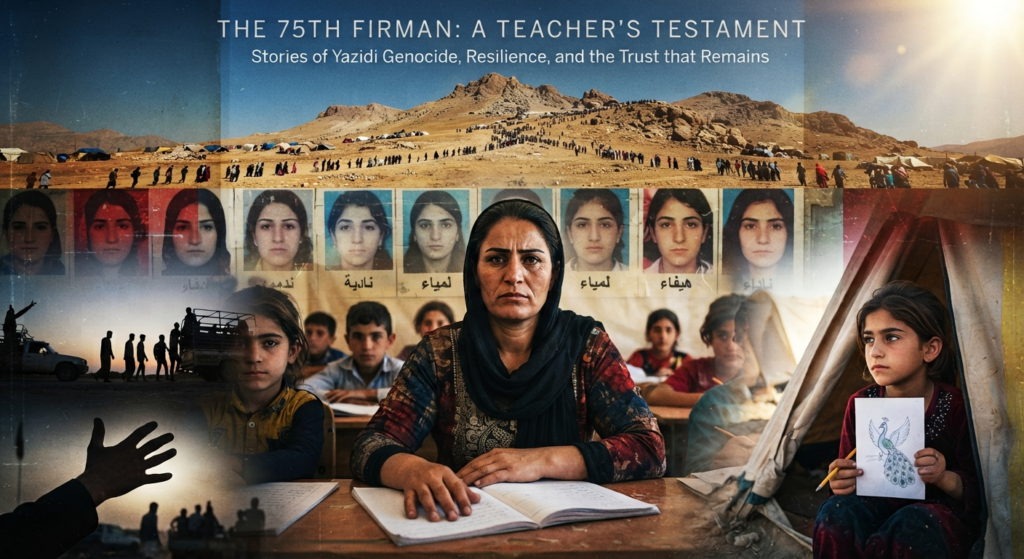
As an English teacher, my classroom has become more than a place to learn grammar or vocabulary. Over the years, it has become a sanctuary – a space where trust, once shattered by the most profound of atrocities, is slowly and meticulously rebuilt. When my Yazidi students sit before me, they are not just students; they are the keepers of a history that the world has largely chosen to forget. They speak to me because they know I listen not just with my ears, but with the weight of their courage resting in the room. They have offered me their most painful memories, trusting me to carry them, to honour them, and to ensure that their voices are not silenced by time or apathy.
For over 6,500 years, the Yazidi people have called the mountains and valleys of Mesopotamia home. They are a peaceful, endogamous community whose ancient, monotheistic faith weaves together the earliest traditions of the region, bound by a deep reverence for Tawusi Melek, the Peacock Angel. But for centuries, this beautiful faith has been violently misunderstood. The world has falsely labelled them as “devil worshippers” a vile, unfounded accusation used to justify their slaughter by extremist groups throughout history. In their collective memory, the community has endured 74 firmans, or genocidal campaigns, aimed at erasing them from the earth. The 74th firman, unleashed by the Islamic State (ISIS) on August 3, 2014, was a devastating, coldly calculated campaign of total eradication from which they are still bleeding today.
My students have shared with me the morning the world they knew shattered. Before that day, hundreds of thousands of Yazidis lived in their ancestral homeland of Sinjar. Without warning, ISIS militants descended. Forces they believed would protect them withdrew without resistance, leaving them entirely defenseless against a terror that moved with bureaucratic precision. Panic consumed their communities as families grabbed whatever they could and ran for their lives.
When the militants entered their villages, they systematically separated the men from the women and children. My students describe, with voices trembling but eyes fierce with resolve, how their fathers, husbands, and older boys were ordered to convert. When they refused, they were forced into trucks, driven to the outskirts, and summarily executed. They were shot, their throats were cut, and their bodies were dumped into mass graves. Thousands of men were massacred in the blink of an eye.
Those fortunate enough to escape fled toward the jagged peaks of Mount Sinjar, only to be trapped. For days, they were besieged by fighters who encircled them, firing upon anyone who tried to move. They were stranded under the scorching August sun without food, water, or medical care. I have listened to the agonizing stories of the children, whose cries echoed across the rocks as they died of thirst and starvation. They were forced to leave small, lifeless bodies under the dirt and rocks as they desperately sought a way to survive.
For the women and girls who did not escape, a living hell awaited. Thousands were abducted and transported into ISIS-controlled territories. Their bodies were commodified and weaponised as ISIS unleashed a systematic campaign of sexual terrorism. Militants classified them as sabaya, or slaves, issuing pamphlets to justify their horrific actions. Girls – some as young as nine – were examined like cattle, given price tags, and sold in slave markets. They were raped repeatedly, chained, tortured with electric shocks, and starved. Many, unable to bear the physical and psychological torment, hurled themselves off the cliffs of Mount Sinjar to escape the horrors.
The boys were stolen from their mothers’ arms and subjected to a different, insidious form of destruction. Forcibly transferred to specialized military camps, these children were brutally indoctrinated, brainwashed, and beaten into abandoning their Yazidi identities, language, and families. They were turned into child soldiers and suicide bombers for the very men who slaughtered their fathers. When some of these boys finally return, the trauma is so severe that they struggle to recognize their own families, their minds fractured by the hate they were forced to internalise.
This genocide was about destroying the soul and erasing a culture. The fighters blew up holy shrines to eradicate heritage. They destroyed schools, levelled hospitals, burned farmlands, and polluted water sources so that the Yazidi could never rebuild in Sinjar.
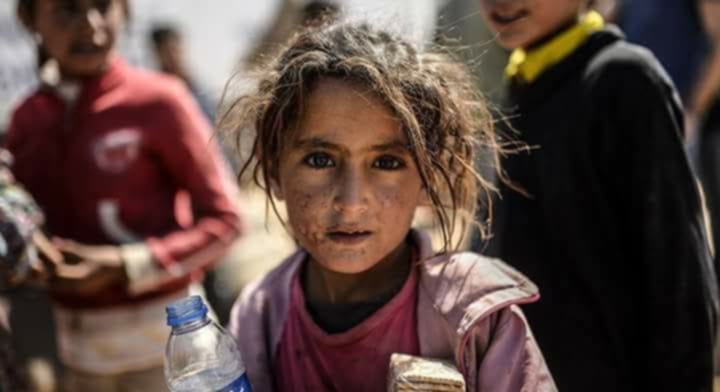
Today, more than a decade since the genocide began, the suffering is far from over. Although ISIS was militarily defeated, the genocide remains ongoing. Hundreds of thousands are still languishing in displacement camps, living in cramped, freezing tents without adequate food, clean water, or psychological support. Sinjar remains a frozen devastation, with the vast majority of infrastructure and homes destroyed. Over 200 mass graves have been discovered, most left un-exhumed. They live with the agonizing reality that thousands of women and children remain missing in captivity. To rescue them, impoverished families are forced to borrow tens of thousands of dollars to pay smugglers, plunging them into massive debt while the world watches.
For the women who miraculously returned, a profound and cruel legal injustice awaits them in Iraq. Many were forced to give birth to children fathered by their rapists. Under Iraq’s National Card Law, any child born to a Muslim father is automatically and permanently registered as a Muslim. Because Yazidi religious law dictates that a child must be born to two Yazidi parents, these children are not accepted into the community. Mothers are faced with a heartbreaking, impossible choice: abandon the children they carried to return to their families, or remain in perpetual exile. What ISIS accomplished by force, the Iraqi legal system continues by legislation—separating mothers from their children and erasing their identity.
My students are a people who have survived the unimaginable, but survival is not the same as living. The world’s attention has faded, and the political will to help has run out. They have been abandoned twice, first to the mercy of ISIS, and now to the apathy of the world.
They do not just need pity; they need structural action. They demand that an international tribunal prosecute the high-level orchestrators of this genocide. They demand that Iraq amend its discriminatory identity laws so mothers are not forced to abandon their children. They demand the safe rescue of their sisters and daughters, and the true reconstruction of their homeland. Until there is justice, safety, and a rebuilt Sinjar, the genocide against the Yazidi people remains a bleeding, unhealed wound on the conscience of humanity. They tell me these stories so that I will not let the world forget. And because they trust me, I will ensure they are heard.