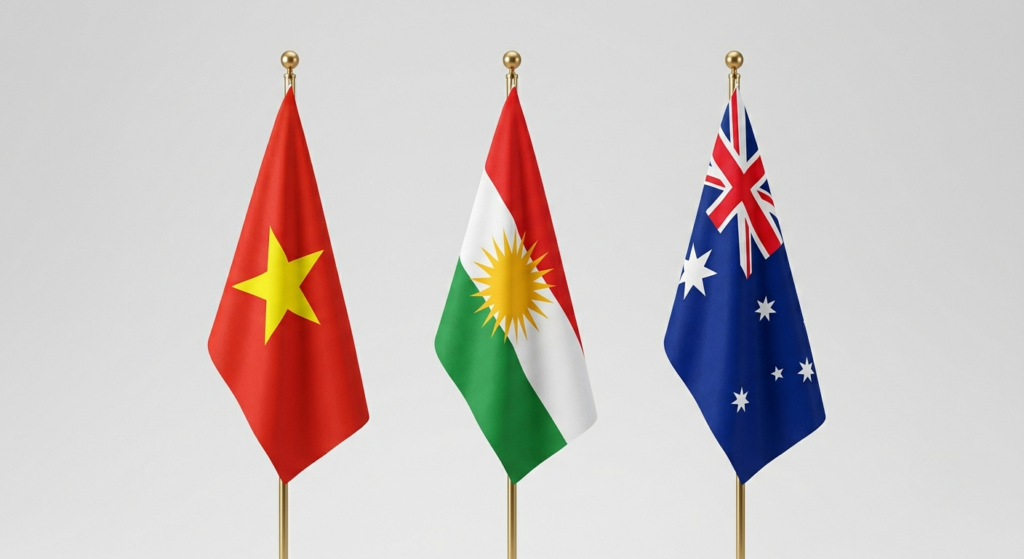
Australia has a long and complex history of providing a safe haven for those fleeing persecution, a tradition that has profoundly shaped our social, cultural and educational landscapes. In my own work as an educator, writer and traveller, I have had the profound privilege of witnessing this transformation from two distinct vantage points: through my close interactions and travels within the vibrant Vietnamese community across Australia, and through my deeply moving experiences teaching adult Yazidi students. These two humanitarian intakes—the resettlement of Vietnamese refugees following the Vietnam War and the more recent intake of Yazidi refugees escaping genocide in the Middle East—share striking parallels. Both groups arrived bearing the deep, invisible scars of conflict and displacement. Yet, looking at the extraordinary trajectory of Vietnamese Australians, we find a beautiful blueprint for how my current Yazidi students can navigate their own paths toward belonging, proving how Australia’s embrace of diversity paves the way for future generations to thrive.
The Shared Crucible: Fleeing War-Torn Homelands
The foundational similarity between the Vietnamese and Yazidi refugee communities lies in the catastrophic conflicts that forced them to flee their ancestral homes. For the Vietnamese, the catalyst was the fall of Saigon in 1975, marking the end of a brutal, two-decade conflict. In the aftermath, millions were displaced, with thousands embarking on perilous ocean voyages in small, overcrowded boats to escape political persecution, enduring terrifying journeys across the South China Sea. During my personal interactions with many Vietnamese communities, combined with travels through Australia’s multicultural hubs—from Cabramatta in Sydney to Richmond in Melbourne—I have sat with older generations of Vietnamese Australians who recounted those harrowing days at sea, memories still vivid despite the decades that have passed.
Nearly four decades later, a remarkably similar tragedy befell the Yazidi people, an ancient ethno-religious minority indigenous to the Sinjar plains of Northern Iraq. In August 2014, Islamic State launched a systemic and genocidal campaign against them. The community faced horrific atrocities, with men massacred and thousands of women and girls subjected to systematic violence and captivity.
In my classroom, the weight of this history is a quiet but palpable presence. My adult Yazidi students have shared glimpses of what it means to be driven from an ancestral land by extremists intent on erasing your very existence. Just like the Vietnamese boat people who left everything behind to escape a regime, my students arrived in Australia with nothing but their resilience. They carry the profound psychological burdens of war—trauma, grief and the ache of separation from loved ones. Yet, what strikes me every day in my teachings is their unwavering determination to rebuild. Whether fleeing by sea or surviving a mountain siege, both communities embody an incredible strength that far outweighs the trauma of their pasts.
The Bedrock of Integration: Two-Sided Educational Programmes
In my writings and daily practice, I have always maintained that education is the ultimate bridge connecting displaced peoples with their new society. However, true integration is never a one-way street; it requires a two-sided educational approach where both the refugees and the host communities learn from one another.
For my adult Yazidi students, acquiring English and navigating complex Australian systems are monumental hurdles. Many entered my classroom with disrupted formal education, meaning we are not just learning a new language, but often building foundational literacy skills from scratch. Programmes like the Adult Migrant English Programme have been vital, but the real breakthroughs happen in the nuanced, tailored spaces of the classroom. I see their faces light up when a difficult English idiom finally clicks, or when we use conversational circles to share stories.
Conversely, our host communities have their own learning to do. During the early years of Vietnamese resettlement, community leaders worked patiently to educate the Australian public, welfare agencies and the press about their cultural needs, slowly dismantling insular attitudes. Today, I see a similar “whole-of-community” approach unfolding for the Yazidis, particularly in regional settlement areas. As an educator, part of my role extends beyond the classroom to writing and advocating for cultural awareness, helping local service providers, employers and neighbours understand the rich history and specific trauma of the Yazidi people. This mutual education breaks down the barriers of unconscious bias, fostering an environment of empathy rather than suspicion.
The Vietnamese Triumph: A Travel Blueprint for Success
The incredible trajectory of the Vietnamese community in Australia offers a profound, living blueprint for what lies ahead for my Yazidi students. In the late 1970s, the arrival of Vietnamese refugees presented a major test to an Australia that had only recently dismantled the restrictive White Australia policy. Initial public anxieties often framed the newcomers with apprehension. Yet, decades later, my travels across the country reveal a community that is not just integrated, but stands as an indispensable pillar of Australian society.
Walking through Vietnamese Australian commercial districts, the sheer entrepreneurial drive is breathtaking. Statistics often show that refugees are uniquely driven to establish their own businesses, a reality I see brought to life in every bustling bakery, restaurant and professional medical practice run by Vietnamese Australians. They have risen to the highest levels of civic, academic and professional life—becoming doctors, engineers, politicians and community leaders who have fundamentally reshaped the modern Australian identity.
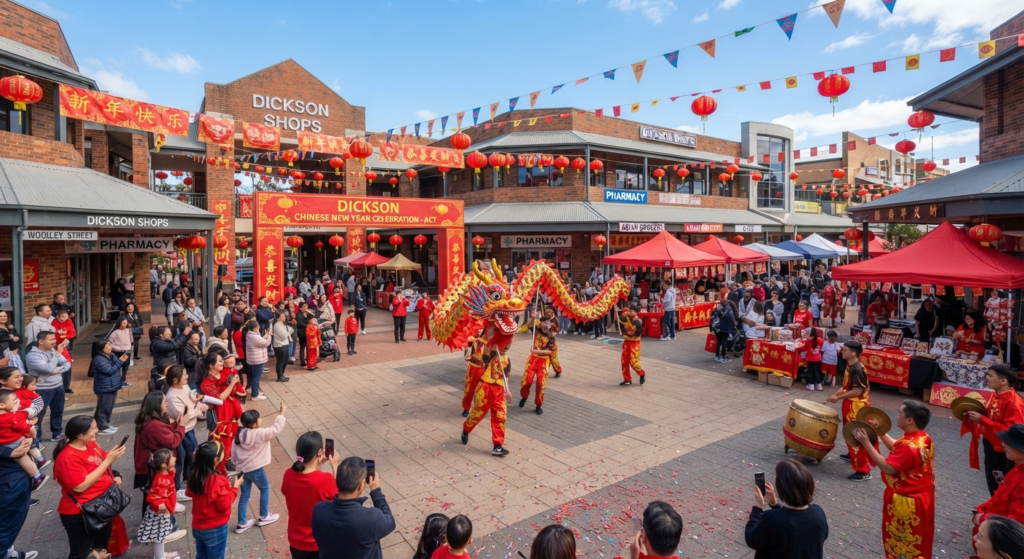
Australian society did not just accept Vietnamese culture; we fell in love with it. Vietnamese cuisine and cultural festivals are now proudly mainstream. This triumph occurred because the community was given the foundational, structural support to stabilize, allowing their natural work ethic and deep focus on education to flourish. It is this exact destination that I envision and write about for my current students.
The Yazidi Journey: Mirroring the Footsteps of Success
My adult Yazidi students are currently at the beginning of the long journey that the Vietnamese community started fifty years ago. They face the immediate, exhausting challenges of overcoming trauma, clearing language barriers and finding meaningful work. Yet, in my daily interactions with them, I already see the exact same promising signs of socio-economic integration.
A key strategic strength of the Yazidi settlement has been its regional focus. Because many of my students come from agricultural backgrounds in the Sinjar plains, settling in regional hubs allows them to connect their existing skills with local environments while healing in a quieter, close-knit setting.
In the classroom, I witness their immense drive every single day. My adult students carry a monumental, almost sacred view of the Australian education system. They are not just studying for themselves; they are doing it to pave a smooth path for their children. Like the Vietnamese parents before them who sacrificed everything, Yazidi adults view Australia as a sanctuary where their children have the freedom to achieve anything. As I guide them through language acquisition, I am acutely aware that I am looking at the future entrepreneurs, lawyers and community leaders of Australia. Their early initiatives—such as organizing cultural cooking events, craft circles and participating in regional sports—mirror the exact communal resilience that defined the early Vietnamese settlers.
A Culture of Acceptance: From the Present to the Future
The acceptance that Vietnamese families enjoy today was actively forged through decades of mutual effort and the maturation of Australian multiculturalism. This established framework now provides a much softer, more fertile ground for the acceptance of Yazidi culture.
Through my writings and community advocacy, I have been heartened to see how warmly Australians are beginning to wrap their arms around the Yazidi people. In regional areas, initial unfamiliarity is rapidly replacing genuine connection. Our neighbours are actively engaging with Yazidi traditions, joining in celebrations for the Yazidi New Year, and sharing in their vibrant music and dance. I have watched with pride as deep bonds of friendship form between local Indigenous elders and Yazidi men, recognizing a shared history of survival, resilience and deep connection to land.
As my students continue to establish their roots, preserving their ancient Yazidi language and sacred traditions through local associations, they enrich the broader Australian tapestry. Just as Australians learned to embrace the Lunar New Year, we are beginning to appreciate the rich, ancient traditions of the Yazidi people.
Conclusion
Though separated by four decades, the Vietnamese and Yazidi refugee narratives in Australia are fundamentally united by a shared arc of tragedy, resilience and eventual triumph. Both communities fled the unimaginable to arrive here with little more than hope. Through dedicated educational spaces—where I am lucky enough to teach every day—the foundations for a prosperous future are being laid.
The Vietnamese Australian community stands as a shining testament to what is possible when compassion and education meet opportunity. My adult Yazidi students are walking that exact same path right now. As they heal, learn and share their heritage, they are weaving their ancient threads into the modern Australian identity, proving once again that mutual acceptance and education are the true catalysts for a harmonious society.