The realisation hit me like a sudden, sweeping chord change on a worn vinyl record. It was early 2002. I was living in Hsinchu, Taiwan, working as an English teacher, spent from long days of lesson planning, correcting grammar, and managing classrooms full of noisy young children. Then, a piece of news drifted across my radar that shattered my daily routine: Roger Waters was bringing his In the Flesh world tour to Osaka, Japan, in late March.
I sat at my desk, staring at the tour dates, my mind instantly racing. I had never seen Roger Waters live. Not the real thing. Not the architect of the grand, cynical, deeply human masterpieces that formed the soundtrack of my life.
Years earlier, back in the late 1980s, I had been among the sea of fans at the Sydney Entertainment Centre, watching Pink Floyd during their A Momentary Lapse of Reason tour. Visually, it was a spectacular triumph; sonically, it was flawless. Yet, despite the brilliant guitar work of David Gilmour and the thumping basslines, something foundational was missing. To me, Pink Floyd without Roger Waters wasn’t complete. It was a magnificent body operating without its dark, brooding heart, a ship missing its chief navigator. The Sydney show had been an incredible concert, but it wasn’t the true Floyd experience I hungered for.
Now, Waters was performing in Osaka. It wasn’t Sydney, and it certainly wasn’t Taipei. It was across an ocean, thousands of miles away, and I was tied to a rigid teaching schedule in Hsinchu. But the moment the news registered, the decision was already made. This was the closest I would ever get to seeing the man himself. I had to go. No matter the cost, no matter the distance, and no matter how absurd the timeline.
Bartering Time: The 24-Hour Blueprint
To make this madness happen, I had to master the art of the professional gamble. My school schedule was an unyielding grid, and children’s programs at a Taiwanese school don’t easily accommodate sudden international rock-and-roll pilgrimages. I approached my boss, preparing myself for a masterclass in negotiation.
I bartered hours like a merchant in a bazaar. I made promises of weekend coverage, undertook extra grading, and guaranteed that my absence would be entirely invisible to the administration. All I needed was a precisely timed, razor-thin window: I needed to walk out the school doors at lunchtime on Monday, March 25, and I promised, on my life, that I would be back at my desk, composed and ready to teach, by lunchtime on Tuesday, March 26.
Twenty-four hours. Two international flights. One legendary rock star. A timeline with zero margin for error.
My boss, perhaps bewildered by the sheer intensity of my dedication, agreed. The blueprint was set.
[Mon 12:00 PM] Exit Hsinchu -> [1:30 PM] Taoyuan Airport -> [3:45 PM] Flight to Osaka
                                                                    |
[Tue 12:00 PM] Return Hsinchu <- [9:30 AM] Flight to Taiwan <- [8:00 PM] Roger Waters Live
When the clock struck noon on Monday, I didn’t just leave the building; I bolted. I caught the bus from Hsinchu to Chiang Kai-shek International Airport (now Taoyuan International) with my heart hammering against my ribs. I remember checking my watch every three minutes. If the highway jammed, the dream died. If immigration was backed up, the dream died.
I checked in for my 1:30PM flight just in time. As the plane roared down the runway, heading eastbound across the East China Sea, I leaned back into my seat, a manic grin spreading across my face. I was flying into the unknown, driven by pure, unadulterated fandom.
Echoes in Osaka: The Dark Side Completes
The flight touched down at Kansai International Airport at exactly 3:45 PM Japan Standard Time, riding a fierce jet stream tailwind. The air in Osaka was crisp, a sharp contrast to the humid warmth of Taiwan. I had no checked luggage—only a small shoulder bag with my passport, cash, a change of shirt, and my prized ticket.
I rushed through KIX immigration, sprinted to the train station, and boarded the Nankai Rapi:t express train into central Osaka. The city blurred past the windows in a flurry of neon signs, grey concrete, and early spring foliage. By the time I navigated the subway lines and walked up to the doors of Osaka Koseinenkin Hall, it was just after 6:30 PM. I had done it. I was standing in front of the venue with an hour and a half to spare.
The atmosphere outside the hall was electric, filled with Japanese fans sporting vintage tour shirts. When the doors opened and I found my seat, the anticipation was almost suffocating.
Then, the lights went down.
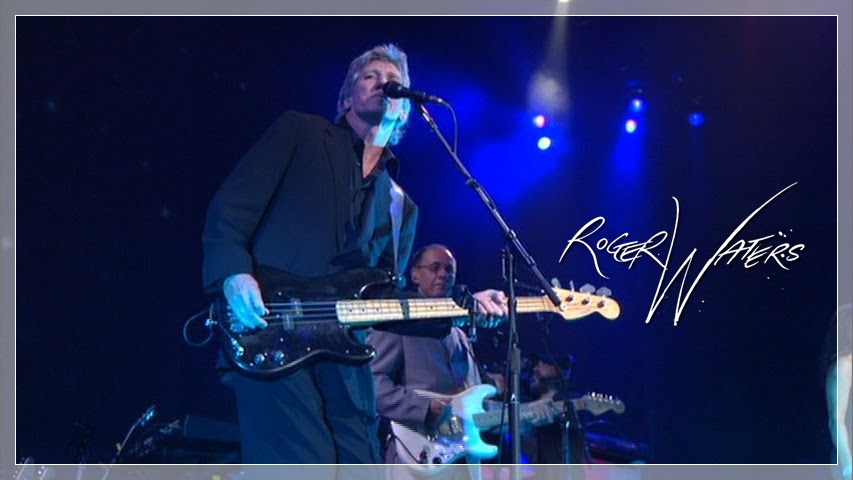
The opening chords of “In the Flesh” tore through the venue with a pristine, earth-shaking quadraphonic sound system that placed every sound directly inside your skull. When Roger Waters stepped up to the microphone, an overwhelming wave of validation washed over me. This was the voice. This was the anger, the passion, the theatrical cynicism that had been missing from that Sydney stadium all those years ago.
For nearly three hours, Waters led us through an unparalleled journey. The first set was an absolute onslaught of Pink Floyd classics: “Mother,” “Another Brick in the Wall,” and an incredible rendition of “Dogs” that felt heavy enough to split the theater in two. The musicianship was flawless, but it was Waters’ presence that anchored the room.
During the 20-minute intermission, the quadraphonic speakers filled the auditorium with the immersive sounds of croaking frogs, distant tractors, and chirping birds, keeping the audience locked inside the world he had built. The second set brought The Dark Side of the Moon to life with “Time,” “Money,” and “Brain Damage,” alongside his brilliant solo work from Amused to Death.
As the final, soaring notes of “Comfortably Numb” and the poignant encore “Each Small Candle” echoed through the hall, wrapping up right at 11:00 PM, I felt completely fulfilled. The missing piece of my musical puzzle had been found.
But as the crowd began to filter out into the cool Osaka night, reality crashed back in. The concert was over. The adventure, however, was entering its darkest phase.
Set the Controls for the Heart of the Tube
Walking out into the quiet streets of Nishi Ward, the adrenaline began to fade, replaced by a deep, bone-weary exhaustion. It was close to midnight, and I needed a place to lay my head for the few remaining hours before my early morning flight back to Taiwan.
In 2002, the boutique, stylish capsule hotels of modern Japan did not exist. There were no trendy pods or sleek amenities. There were only traditional, utilitarian, strictly male-only capsule blocks designed for exhausted salarymen who had missed the last train home. I found one a short distance from the venue, paid my yen, and walked inside.
The locker room smelled faintly of stale tobacco and laundry detergent. I changed into the provided yukata robe and stepped into the sleeping quarters. Nothing could have prepared my senses for the sight.
Rows upon rows of plastic cubicles were stacked two-high along the walls, looking less like hotel rooms and more like a high-tech morgue or a human honeycomb. I climbed up the small ladder and crawled backward into my assigned slot.
“It wasn’t a room. It was an upturned phone box laid horizontally, an acrylic coffin designed with the barest concession to human occupancy.”
The space was roughly three feet wide, three feet high, and six feet long. When I lay down, the yellowed plastic ceiling sat mere inches from my face. Inside this plastic tube was a tiny, built-in control panel from the 1980s, complete with an analog clock, a miniature television screen that hummed with static, and a radio knob that hissed with white noise.
I pulled the thin bamboo screen shut at the foot of the capsule, and the air immediately grew heavy, warm, and static. That was when the claustrophobia struck.
The walls felt like they were actively contracting, pressing in on my chest. Every breath felt recycled, stolen from the dozens of snoring salarymen occupying the tubes around me. The plastic shell amplified every sound: a deep cough three pods down sounded like it was happening right next to my ear; the rustle of synthetic sheets echoed like gunfire.
I lay flat on my back, staring up at the plastic ceiling, my mind screaming at me to get out, to crawl into the open air of the corridor. I felt trapped in a literal manifestation of a Waters lyric—isolated, confined, a cog inside a heavy, unfeeling machine. Is there anybody out there? I thought grimly, desperately trying to practice the deep-breathing techniques I usually reserved for stressful classroom days.
I didn’t sleep. Instead, I spent five hours trapped in a waking fever dream, suspended in a plastic box in the middle of Japan, counting down the minutes until dawn.
The Return: Making the Noon Bell
When my watch alarm finally beeped at 5:30 AM, I didn’t just wake up; I escaped. I slid out of the capsule, changed into my clothes, and checked out, breathing in the cold morning air of Osaka like a drowning man breaking the surface of the ocean.
The journey back was a blur of pure kinetic motion. I boarded the early morning train back to Kansai International Airport, arriving long before the city had fully woken up. In 2002, there were no low-cost carriers to whisk you away at dawn, so I waited for the first available legacy flight—a China Airlines bird scheduled for a 9:30 AM departure.
I boarded the plane in a state of complete exhaustion, my eyes bloodshot from the sleepless capsule stay, but my spirit remained entirely unbroken. As the aircraft took off, heading westbound into the heavy headwinds back toward Taiwan, I fell into a deep, dreamless sleep, my head resting against the cabin window.
We landed at Taoyuan Airport at roughly 11:30 AM local time. The time difference bought me a precious extra hour. I practically sprinted through the terminal, bypassed the souvenir shops, and threw myself onto the direct bus back to Hsinchu.
At exactly 11:55 AM on Tuesday, March 26, the bus pulled into the station near my workplace. I walked through the front doors of the school, smoothed down my collar, grabbed my marker pens, and walked into my classroom just as the noon bell rang. My students looked up, greeting me cheerfully, completely unaware that less than sixteen hours prior, I had been singing along to Pink Floyd anthems in another country, or that just six hours ago, I had been trapped inside a plastic coffin in downtown Osaka.
It was a grueling, expensive, exhausting, and borderline irresponsible 24 hours. But as I turned to the whiteboard to begin the afternoon lesson, a quiet smile crossed my face. I had seen the complete heart of Pink Floyd live. I had stood in the presence of Roger Waters. And for a fan, no distance is too great, and no capsule is too small, to witness that kind of magic.