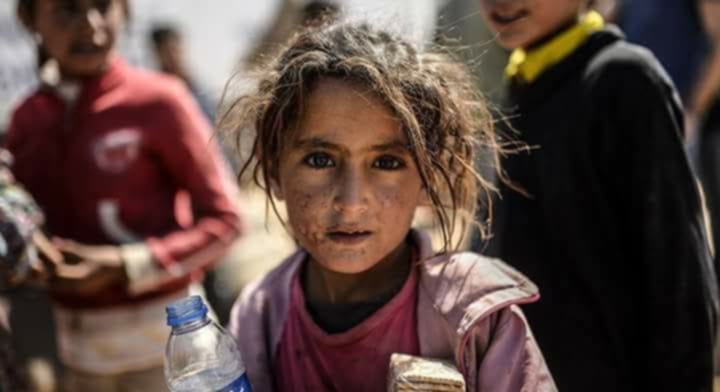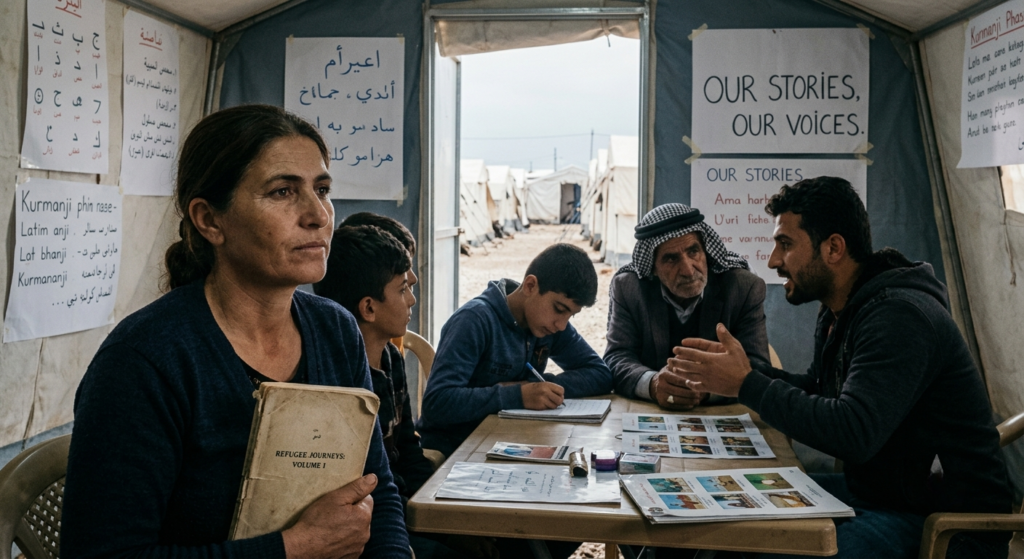
An integration of academic landscape with real-world teaching, youth mentorship, and the narrative of refugee displacement.
Introduction: From the Page to the Classroom
In my three-part book series exploring the harrowing realities of refugee displacement, I have often written that forced migration strips a person down to their barest vulnerabilities. Yet, as my writings emphasize, displacement cannot entirely erase what is carried within. For the Yazidi people, what is carried is a complex, beautiful, and heavily burdened linguistic landscape.
When I step into the classroom to teach adult and youth Yazidi students, the structural theories of linguistics cease to be merely academic—they become living, breathing dynamics. To truly teach and walk alongside the Yazidi people, one must understand how their daily communication practices are shaped by an ancient ethno-religious identity, a history of systemic persecution, and the profound trauma of the 2014 genocide. In our classrooms, language is never just about vocabulary; it is about public safety, psychological reclamation, and the very preservation of a fractured heritage.
1. The Classroom Divide: Indo-European Roots vs. Afro-Asiatic Trauma
In my writings on the mechanics of cultural displacement, I examine how language can serve as both a sanctuary and a barrier. At the core of the Yazidi experience is the vast structural gulf between Kurdish and Arabic—two entirely different language families that are not mutually intelligible. Arabic belongs to the Afro-Asiatic (Semitic) family, while Kurmanji—the Kurdish dialect spoken by most Yazidis—is an Indo-European language.
[Indo-European Roots] ──► Kurmanji / Ezdiki  ──► Sacred Oral Tradition (Qawls) & Identity
[Afro-Asiatic Roots]  ──► Arabic             ──► Ba'athist Arabization & Administrative Literacy
In my teachings, I witness the profound weight of this divide:
- The Sacred Mother Tongue: Kurmanji is the heartbeat of my students’ identity. It is the language of their sacred oral traditions, the qawls (hymns) and beyts (prayers). When working with youth, I emphasize the beauty of this heritage—including the historical right-to-left Yezidi script revived in 2013, and the political assertion of “Ezdiki” by Caucasian Yazidis seeking a distinct identity.
- The Literacy Paradox: Because of the historical Ba’athist “Arabization” campaigns in Iraq, many of my adult students were denied formal education in their mother tongue. Consequently, while they speak Kurmanji, their written literacy is often strictly in Arabic. When I prepare learning materials, I am constantly navigating this paradox: using Arabic as the pragmatic bridge for literacy, while honoring Kurmanji as the language of the heart.
2. The Bashiqa Exception: A Lesson in Pluralism
A fascinating element I explore in my work is the linguistic anomaly of Bashiqa and Bahzane in the Nineveh Plain. Here, the Yazidi population speaks a highly hybridized, ancient regional dialect derived from Arabic, enriched with Kurdish, Turkish, Persian, and Assyrian vocabulary.
In my books, I highlight Bashiqa as a profound symbol of what displacement threatens to destroy: intangible cultural heritage built on peaceful coexistence. This dialect was shared by Yazidis, Christians, and Muslims alike. In our educational spaces, referencing the Bashiqa dialect serves as a powerful teaching tool for Yazidi youth—a historical proof that their culture is resilient, adaptive, and deeply rooted in the diverse fabric of their ancestral lands.
3. Teaching Through Trauma: Language as a Trigger and a Disguise
Perhaps the most critical intersection of my writings on displacement and my active teaching is the psychological weight of the Arabic language. For many of my students—particularly the women and youth who survived the ISIS genocide—Arabic is not merely a language; it is a profound psychological trigger. It was the language of their captors.
The Classroom Reality: I have written about the sheer panic that can occur when a traumatized refugee is greeted by an Arabic speaker, a terrifying echo of 2014. In my teaching practice, creating a trauma-informed environment means strictly ensuring that Kurmanji is centered for emotional safety and psychological recovery, ensuring students feel entirely secure before introducing new linguistic concepts.
Conversely, my writings also capture the heartbreaking duality of Arabic as a protective disguise within Iraq. To speak Kurmanji in public is to wear a target. My students have shared stories of code-switching—Yazidi women asking for communication in Arabic in public spaces to blend in, or Bashiqa residents adopting mainstream Mosuli Arabic when traveling to Mosul. It is a survival mechanism: using the language of historical oppressors as a camouflage to stay alive.
4. Tailoring the Pedagogy: Modes of Interpersonal Connection
Understanding how the Yazidi people communicate has fundamentally reshaped my approach as an educator. Because of the low literacy rates resulting from systemic educational neglect, standard Western teaching models often fail.
Through my work, I have adapted my pedagogy to match their traditional interpersonal preferences:
| Demographic | Communication / Learning Preference | Educational Application |
|---|---|---|
| Yazidi Men & Elders | Face-to-face, verbal, and dialogue-heavy. Deeply rooted in oral tradition. | Classroom environments focused on oral storytelling, spoken-word processing, and direct, conversational teaching. |
| Yazidi Women | Pictorial, graphic formats paired with highly simplified text. | Visual syllabi, illustrated learning modules, and multi-sensory educational tools that bypass written literacy barriers. |
| Yazidi Youth | Dynamic, identity-focused engagement. Bridging the old world and the new. | Using creative writing and multimedia to help them process their displaced identities while honoring their heritage. |
Conclusion: The Ultimate Goal of Our Work
Ultimately, the linguistic landscape of the Yazidi people confirms everything I have sought to document in my three-part book series on refugee displacement. Language is never neutral. For the Yazidis, Kurmanji is the sacred, oral heartbeat of their survival, while Arabic remains a complex tool of both trauma and tactical safety.
By integrating these linguistic realities into our teachings and writings, we do more than just teach a curriculum or tell a story. We help Yazidi adults and youth navigate a deeply fractured world, ensuring that as they heal from the wounds of displacement, their voices—in every language they choose to speak—remain entirely their own.