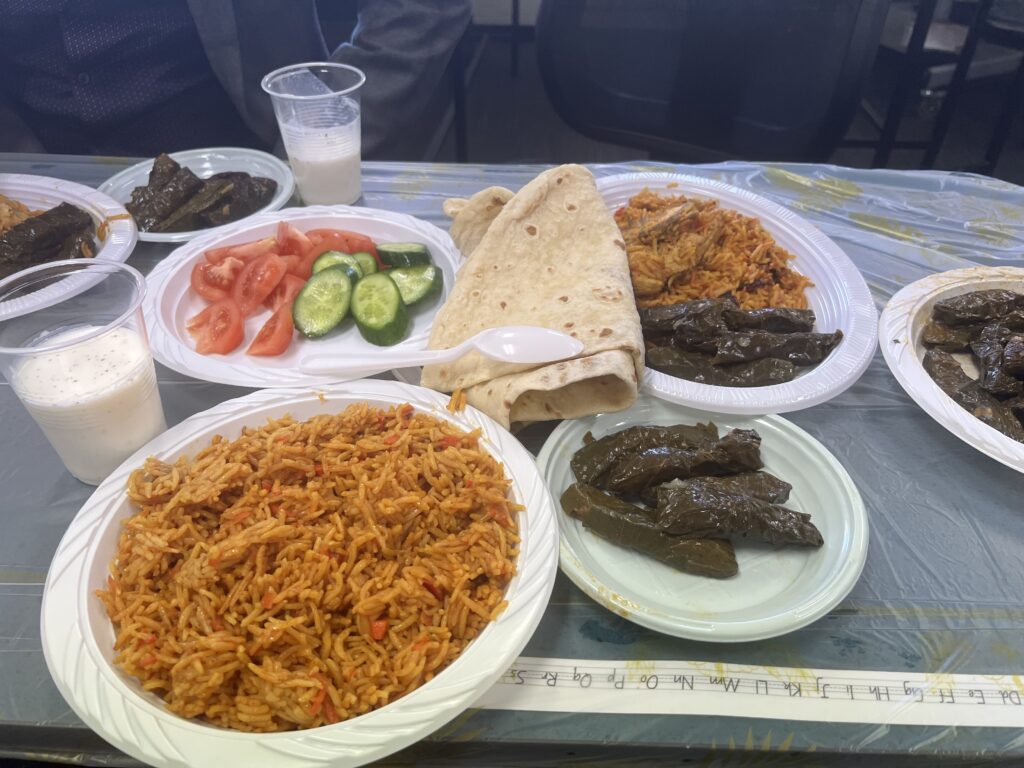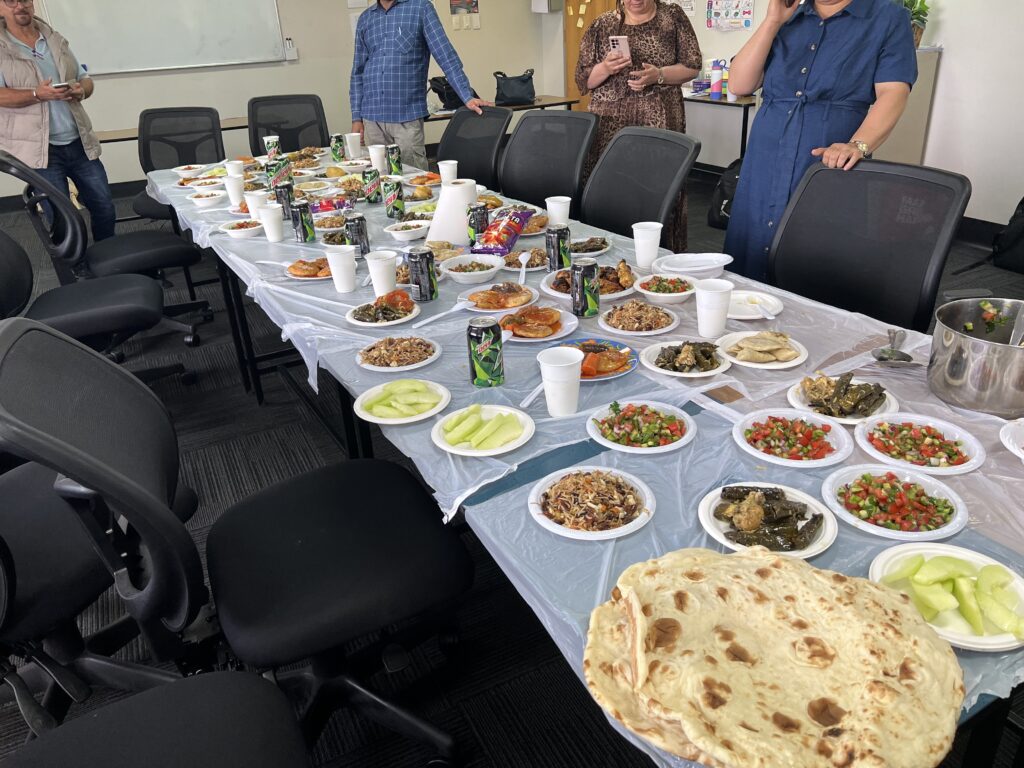
As an educator working with adult Yazidi students, I quickly learned that our lessons extended far beyond the classroom curriculum. To truly know the Yazidis, an ancient, indigenous ethno-religious minority primarily hailing from the Nineveh plains and the Sinjar region of northern Iraq is to understand their fierce resilience. Throughout a long history marked by displacement and severe persecution, they have maintained a deeply grounded cultural identity. And as my students so generously showed me, one of the most profound ways this identity is preserved, celebrated, and gifted to others is through their culinary traditions.
For my students, food was never just physical sustenance. The banquets they lovingly prepared and shared with me were communal rituals, acts of deep hospitality that bind families, honor the deceased, and connect the living to one another.
The Sacred Foundation: The Emphasis on Bread
At the heart of the Yazidi diet and a staple that frequently found its way into our morning breakfast is bread. It forms the cornerstone of daily meals and holds immense spiritual weight. I remember the modest, comforting breakfasts my students described or shared: simple flatbread served alongside rich sheep or cow yogurt, fresh cheese, honey, and, invariably, a glass of sweet black tea.
However, bread extends far beyond daily routine. In the rural, pastoralist traditions of the Yazidi homeland, simple, durable breads were essential for survival. My students would speak fondly of shilik, a traditional flatbread made from a simple batter of wheat flour, water, and salt. Spread by hand over a hot, oiled steel griddle, the resulting bread is dense and chewy. Because it can be folded and stored for long periods, shilik was historically carried by Yazidi shepherds tending their flocks in the mountains—a taste of home built for endurance.
Bread also bridges the material and spiritual worlds during religious festivals. My students explained how during Ser Sal, the Yazidi New Year in April, a festive bread called sawuk is baked, not just for the family, but to distribute to those in need and to take to cemeteries so that ancestors can partake in the celebration. Similarly, during the winter festival of Belenda, they bake kasham, hiding a small object inside the dough to bring good luck and prosperity to whoever finds it. In our shared meals, bread served as the literal foundation for everything used as an edible vessel, a utensil for scooping, and a sponge to soak up rich flavours.
Banquets of Community: Signature Savoury Dishes
To sit at a banquet with adult Yazidi students is to experience hospitality on a grand scale. Their lunches and dinners revolve around robust stews, stuffed vegetables, and spiced rice, with lamb and chicken taking centre stage.
The undisputed crown jewel of these gatherings is Iraqi Dolma, or dolma’t renjeh (“dolma of colours”). My students would laugh about the intense, labour-intensive preparation required, which makes it a true labour of love. Rather than just utilising grape leaves, their version incorporates a hollowed-out medley of small eggplants, zucchini, onions, tomatoes, bell peppers, and cabbage. The filling is a rich mixture of washed rice, finely diced meat, and mountains of fresh dill, cilantro, and parsley.
What I found most striking about the dolma they shared with me was its distinctive sweet, sour, and tangy flavour profile. This complex taste comes from a masterful blend of pomegranate molasses, tamarind paste, and powdered black limes (Noomi Basrah), alongside warm spices like allspice and paprika. Cooked slowly over a base of lamb chops or potatoes to prevent sticking, the serving of dolma is a theatrical, communal event. The large pot is covered with a massive tray and skillfully flipped upside down, sending a steaming cascade of colourful vegetables into the centre of the table, ready to be devoured by a large gathering of friends.
Another cornerstone of our communal eating was Tashrib. Its name comes from the Arabic word for “soak,” which perfectly describes the magic of the dish. Tashrib consists of bone-in lamb simmered for hours with chickpeas, onions, garlic, dried limes, and a baharat seven-spice blend. To serve, pieces of flatbread are torn across a giant communal platter, and the tender meat, chickpeas, and rich broth are poured directly over top. My students taught me that Tashrib is a dish for life’s major milestones – both weddings and funerals. Eating it is a beautifully tactile experience; it is eaten entirely with the hands, and my students always reminded me to lick my fingers, because as they say, “that is where all the taste is.”
For special celebrations, they would introduce me to Biryani, a highly fragrant basmati rice dish folded together with chicken or lamb, fried potato cubes, green peas, carrots, raisins, peanuts, and almonds, heavily scented with turmeric, cardamom, and cinnamon. On other days, we might share Kubba Mosul, a magnificent, savory meat pie. It features a thin, nine-inch disc of elastic bulgur wheat dough stuffed with ground lamb, onions, raisins, and pine nuts, gently boiled or fried to perfection.
Sacred Foods and Fasting Traditions
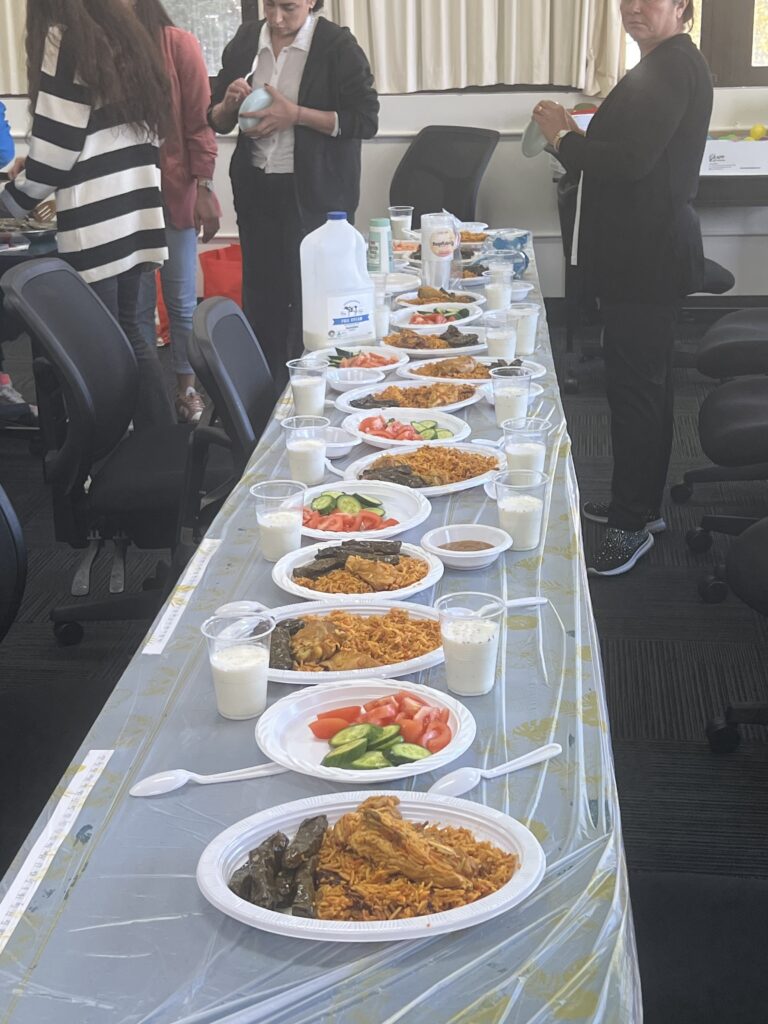
Through our conversations over tea, my students illuminated how deeply food is intertwined with Yazidi religious rites. They spoke of Smat (or Semāt), a ceremonial porridge prepared in massive pots over open wood fires during major religious holidays like Khidelyas Eid, or during the great Jamaya Lalishi (Feast of the Assembly). Made of slow-cooked whole wheat, meat, and chickpeas, Smat is distributed to all neighbours and believers as a sacred blessing, reinforcing social solidarity – a unity I felt deeply whenever we shared a meal.
They also shared the beautiful imagery of Ser Sal in April, when eggs are hard-boiled and dyed in brilliant colors. The egg represents the primordial “White Pearl” from which the world was created, and a traditional egg-cracking game called hekkane symbolises the bursting of this pearl and the vibrant arrival of spring.
When discussing the fast of Khidr Aylas in February, my students explained that when the sun goes down and the fast is broken, the meals consist entirely of grains, flour, and dairy, as harming animals is strictly forbidden during this holy period.
And, of course, no Yazidi gathering is complete without sweets. Alongside Baklava, my students introduced me to Kuliča (or Kolecha) – delicate, half-moon-shaped biscuits made from a rich yeast and butter dough, stuffed with sweet date paste or crushed nuts, and baked with a golden egg wash and sesame seeds.
Dietary Taboos: The Meaning Behind the Food
While Yazidi cuisine shares flavours with its Kurdish and Middle Eastern neighbours, it is uniquely defined by strict dietary taboos that my students explained with a mix of reverence and historical memory. The most famous of these is the absolute prohibition against eating lettuce.
This restriction is layered with meaning. Linguistically, the Kurdish word for lettuce is khas, which sounds identical to ḵāṣṣ, the word Yazidis use for their holy men and saints. Consuming it is avoided as a form of linguistic respect. Furthermore, historical folklore recounts that when a revered 13th-century Yazidi saint was executed, an angry mob mocked his body by pelting it with heads of lettuce. For my students’ community, avoiding lettuce is a quiet, enduring way to refuse participation in that ancient disrespect.
They also noted other traditional boundaries, such as the prohibition of pork, and localised taboos in certain regions against cabbage or fish, rooted in notions of spiritual purity. Yet, unlike some neighbouring cultures, Yazidi tradition has never strictly prohibited alcohol.
Conclusion
Teaching my adult Yazidi students was a masterclass in resilience, generosity, and community. For the Yazidi people, food is a vibrant tapestry woven from the threads of agricultural survival, religious devotion, and historical memory. From the simplest flatbread shared during a classroom break to the complex, tangy depths of a magnificent holiday dolma, their cuisine tells the story of a people who have endured tremendous hardship, yet continue to look at the world – and their guests – with a profound spirit of abundance, warmth, and reverence.